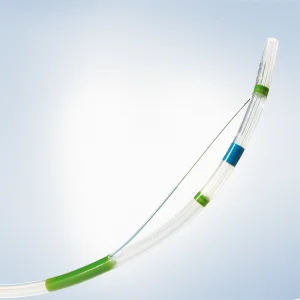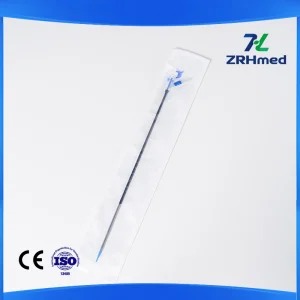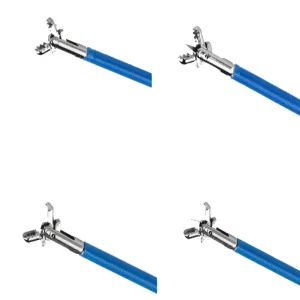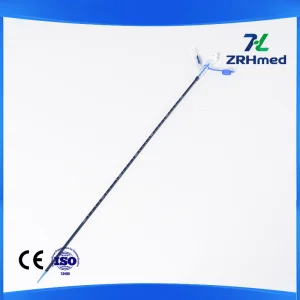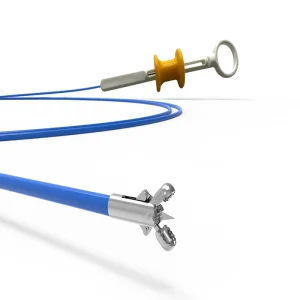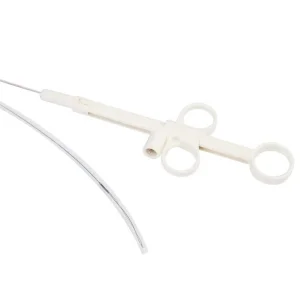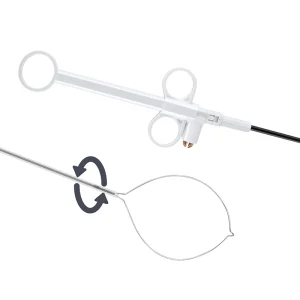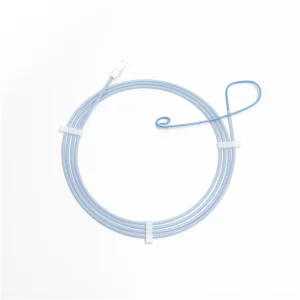
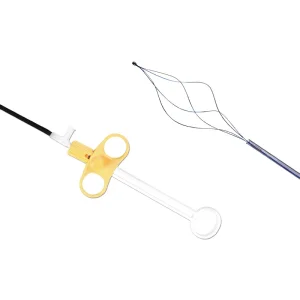
ERCP / Biliary Access
Explore Specifications
Engineered specifically to support clinical demands across Cairo, Alexandria, Mansoura, and Upper Egypt hospital networks with 1:1 torque responsiveness and kink-resistant Nitinol structures.
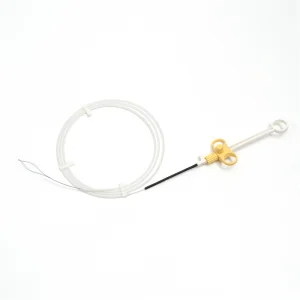
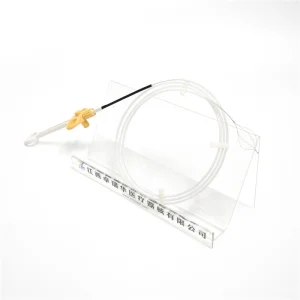
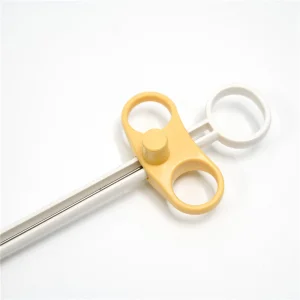
The Nile River basin and arid climate zones of Egypt present one of the highest geographical incidences of nephrolithiasis and choledocholithiasis globally. Studies conducted across Cairo University Hospital (Kasr Al Ainy), Ain Shams University Hospital, and the world-renowned Mansoura Urology and Nephrology Center (UNC) document substantial patient volumes suffering from recurrent biliary stones and complex intrarenal calculi.
Historically correlated with historical Schistosomiasis (bilharzia) sequelae, metabolic variations, and persistent climatic dehydration, Egypt's biliary duct pathology frequently manifests as severe ductal dilatation, strictures, and multiple common bile duct (CBD) stones. Endoscopic Retrograde Cholangiopancreatography (ERCP) has shifted decisively from an exploratory diagnostic technique to a purely therapeutic intervention, escalating the procedural consumption of mechanical stone retrieval baskets, Dormia designs, and lithotripsy accessories.
Concurrently, the economic architecture of the Egyptian medical supply chain is undergoing profound structural reconfiguration under the Unified Procurement Authority (UPA - هيئة الشراء الموحد). Healthcare tenders for tertiary public facilities, university teaching centers, and private hospital chains (such as Cleopatra Hospital Group and Alameda Healthcare) demand strict international certifications (CE MDR, ISO 13485) combined with factory-direct procurement models to mitigate currency exchange pressures while ensuring continuous surgical inventory.
| Evaluation Parameter | Direct Chinese Specialized Manufacturer (ZhuoRuiHua) | European / American Multi-Tier Brands | Generic Domestic Resellers |
|---|---|---|---|
| Metallurgical Integrity | Medical-Grade Superelastic Nitinol (Ni-Ti), shape memory calibrated for biliary and ureteral elasticity. | Comparable alloy standards, high metallurgical consistency. | Variable wire sourcing; potential risk of basket arm deformation under stone capture stress. |
| Egyptian Regulatory Compliance | Full CE Certification, ISO 13485:2016, technical dossier ready for EDA fast-track registration. | Full documentation available, premium regulatory overhead cost loaded into unit pricing. | Partial documentation; frequent delays during Egyptian Drug Authority clearance. |
| Landed Cost in EGP | Optimal direct-factory FOB/CIF pricing, reducing procurement budget drain by 40% - 60%. | High foreign currency barrier, vulnerable to steep EGP/USD/EUR exchange fluctuations. | Moderate to high markup with minimal warranty or direct engineering recourse. |
| OEM / Customization Scope | Custom basket loop dimensions (15mm to 35mm), catheter lengths (90cm to 210cm), French sizes (1.8Fr to 7.0Fr). | Rigid catalog configurations; negligible willingness for local Egyptian customization. | Zero OEM engineering capabilities; catalog restricted to stock availability. |
Precision manufacturing of stone baskets requires an exact convergence of micro-laser welding, biocompatible superelastic shape-memory alloys, and low-friction sheath polymers to navigate convoluted anatomies.
Manufactured with thermal-treated Nickel-Titanium alloy that exhibits true superelasticity at human body temperature (37°C). The basket cage can be fully compressed into a 1.8Fr - 3.0Fr catheter without plastic deformation, instantly restoring its pre-formed spatial geometry upon ductal deployment.
High-density braided stainless-steel drive wire coated with medical-grade PTFE or fluoropolymer sheath minimizes frictional drag inside tortuous endoscope channels. The 1:1 torque transmission enables endoscopists to rotate the basket tip delicately to ensnare calculi lodged in eccentric diverticula or cystic duct junctions.
Precision micro-plasma or laser welding forms an ultra-smooth rounded distal bullet tip. This design mitigates the risk of mucosal perforation in the friable ampullary region, bile duct wall, or renal calyces, providing Egyptian interventionalists with maximum tactile feedback and clinical confidence.
Different anatomical segments and institutional capabilities in Egypt mandate distinct basket geometries, sheath flexibilities, and multi-lumen options.
In high-volume endoscopy suites such as the Theodor Bilharz Research Institute (TBRI) and National Liver Institute (Menoufia), clinical presentations of choledocholithiasis frequently involve hard, pigmented, or cholesterol stones measuring over 12mm in diameter. Our 4-wire and 6-wire helical/diamond extraction baskets offer reinforced cage tensile strength capable of interfacing directly with emergency mechanical lithotriptors when calculus impaction occurs at the ampulla of Vater.
For endourology departments across Alexandria, Tanta, and Upper Egypt, the treatment of lower pole caliceal stones requires ultra-flexible, tipless nitinol baskets (1.5Fr - 2.2Fr). The zero-tip configuration enables direct stone grasping at the caliceal floor without causing mucosal avulsion or parenchymal trauma, preserving endoscope deflection angles during holmium or thulium fiber laser (TFL) stone dusting.
Basket entrapment represents a feared intraoperative complication during ERCP. Our factory implements a calibrated distal release threshold and high-tensile drive cable crimping that permits external mechanical traction or lithotripsy cutting sheath introduction without spontaneous detachment inside the patient's ductal system.
Procurement parameters routinely requested for Egyptian hospital supply agreements:
Importing medical devices into Egypt requires meticulous documentary alignment. ZhuoRuiHua provides turnkey technical dossiers to streamline customs clearance and domestic registration.
Our export team possesses extensive operational familiarity with Egypt’s Advanced Cargo Information (ACI) system under the Nafeza platform, providing compliant shipment data and required certification before vessel departure:
Medical consumables destined for storage in Egyptian warehouses face high summer ambient temperatures and variable humidity across Delta and Upper Egypt regions:
How ongoing innovations in micro-fabrication, laser lithotripsy integration, and smart catheter extrusions will elevate clinical efficacy for Egyptian gastroenterology and urology centers.
Optimization of 4, 6, and 8-wire helical, diamond, and tipless baskets with optimized 1:1 torque responsiveness and biocompatible low-friction sheathings.
Catheters featuring central working channels that allow simultaneous basket capture and introduction of 200µm holmium or thulium laser fibers to fragment stones in situ.
Convergence with negative-pressure ureteral access sheaths (FANS technology) to instantly evacuate dust fragments during stone fragmentation, maintaining renal pressure below 30 mmHg.
Integration of distal pressure and endoscopic micro-sensors providing real-time feedback on biliary wall resistance to eliminate procedural perforation risks.
Answers addressing technical specifications, logistics, Egyptian Drug Authority processes, and custom manufacturing capabilities.
Nitinol (Nickel-Titanium) possesses thermal shape memory and superelastic properties that permit elastic strain up to 8% without permanent deformation, compared to less than 1% for stainless steel. During biliary procedures in tortuous anatomy, a stainless-steel wire basket frequently kinks when forced through a deformed ampulla or strictured common bile duct, rendering it unusable or risking bile duct laceration. Nitinol baskets naturally spring open to their pre-set geometric shape immediately upon exiting the catheter sheath and can be repeatedly opened and closed without losing radial expanding force.
We supply comprehensive technical documentation required by the Egyptian Drug Authority (EDA), including CE Declarations of Conformity, ISO 13485:2016 certificates, product technical construction files (TCF), biocompatibility test reports (ISO 10993), sterilization validation certificates (ISO 11135), and legalized Certificates of Free Sale (CFS). Our dedicated regulatory affairs department coordinates directly with your designated regulatory representative in Cairo to provide swift responses to any EDA scientific committee inquiries.
Yes. As an authentic primary manufacturer, we support comprehensive OEM/ODM partnerships for Egyptian medical supply firms. This includes customized packaging layout design, Egyptian distributor branding, Arabic/English bilingual labeling, customized working lengths (e.g., specific requirements for gastroscope vs. duodenoscope channels), tailored basket wire profiles (helical, diamond, oval, or tipless), and handle ergonomics customized to clinician preferences.
Our biliary ERCP extraction baskets typically feature catheter outer diameters of 1.8mm to 2.5mm (equivalent to 5.5Fr - 7.5Fr), making them fully compatible with standard duodenoscopes possessing working channels of 2.8mm, 3.2mm, 3.7mm, or 4.2mm. For endourological applications (ureterorenoscopy), our micro-baskets utilize sheath diameters starting from 1.5Fr (0.50mm) to 2.4Fr (0.80mm), readily compatible with flexible and semi-rigid ureteroscopes with instrument channels of 1.2mm (3.6Fr) or larger.
Our export documentation department strictly complies with the Egyptian Ministry of Finance’s National Single Window for Foreign Trade Facilitation (Nafeza). Prior to cargo loading at Chinese shipping hubs (Shanghai, Ningbo, or Guangzhou), we ensure the client's Advance Cargo Information (ACID) number, Egyptian importer tax ID, and exporter registration details are systematically embedded into all bills of lading, packing lists, and commercial invoices, preventing customs penalties and clearance bottlenecks.
For standard catalog configurations with ZhuoRuiHua branding, trial orders can be initiated with an MOQ as low as 50 to 100 units to facilitate hospital clinical evaluations and EDA sample testing. For custom OEM branded runs, typical MOQs range from 500 to 1,000 units per specification. Standard production lead times average 15 to 25 business days depending on volume, with expedited air cargo delivery to Cairo International Airport (CAI) within 5 to 7 days.
Standardized hospital consumables designed to integrate seamlessly with your stone extraction operations, tissue acquisition protocols, and drainage interventions.