The field of endoscopy, particularly the integration of biopsy capabilities, is a cornerstone of modern diagnostic and interventional medicine. This sector is characterized by continuous innovation, stringent regulatory demands, and a growing global need for accurate and minimally invasive procedures.
The global market for endoscopic devices, including those with biopsy functionalities, is expanding significantly. Driven by increasing prevalence of gastrointestinal diseases, early cancer detection initiatives, and the demand for advanced minimally invasive surgical techniques, the market is projected for robust growth. Key regions include North America, Europe, and the Asia-Pacific, with the latter showing particularly high growth potential due to improving healthcare infrastructure and rising patient awareness.
Manufacturers in this sector must adhere to stringent international quality and safety standards, such as ISO 13485, CE marking (for European markets), and FDA clearance (for the U.S. market). Compliance ensures that products are safe, effective, and reliable. Demonstrating robust quality management systems, thorough documentation, and adherence to ethical manufacturing practices are critical for building trust and credibility with global buyers, directly aligning with Google's E-E-A-T principles.
Innovation in endoscopy is driven by the pursuit of better visualization, improved maneuverability, and enhanced diagnostic precision. This includes advancements in high-definition imaging (4K, 3D), miniaturization of components for smaller working channels, development of specialized biopsy forceps for difficult-to-reach lesions, and integration of artificial intelligence for real-time analysis. Manufacturers focusing on these areas offer significant information gain and a competitive edge.
Chinese manufacturers, particularly those with specialized production lines for medical consumables like endoscopy biopsy tools, offer a compelling blend of efficiency, scale, and competitive pricing without compromising on quality or regulatory adherence.
Chinese factories have invested heavily in advanced manufacturing infrastructure and process optimization for endoscopic accessories. This includes automated assembly, precision tooling, and streamlined quality control protocols, enabling high-volume production with consistent product quality. The ability to produce large batches efficiently directly translates to cost savings for global distributors.
Leveraging economies of scale and optimized supply chains, Chinese manufacturers can offer highly competitive pricing for endoscopy with biopsy devices. This allows international buyers to procure high-quality, CE-certified products at a lower cost, enhancing their competitive position in their respective markets. The capacity to scale production rapidly meets fluctuating global demand.
With integrated R&D, manufacturing, and export capabilities, Chinese manufacturers provide a stable and reliable supply chain. This resilience is crucial for global distributors who depend on consistent product availability to serve healthcare providers. Strong logistical networks ensure timely delivery worldwide, minimizing disruptions.
Endoscopy with biopsy solutions are vital across a spectrum of medical disciplines, demonstrating adaptability and crucial utility in diverse clinical settings worldwide.
The most common application. Biopsy forceps are indispensable for diagnosing conditions like gastritis, ulcers, H. pylori infections, and various forms of GI cancer. Endoscopic biopsies allow for timely diagnosis and staging, guiding treatment decisions. Applications range from routine screenings to complex interventional procedures.
Bronchoscopic procedures utilize biopsy tools to obtain tissue samples from the lungs and airways. This is critical for diagnosing lung cancer, interstitial lung diseases, infections (like tuberculosis), and sarcoidosis. Targeted biopsies through endobronchial ultrasound (EBUS) significantly improve diagnostic yield and patient management.
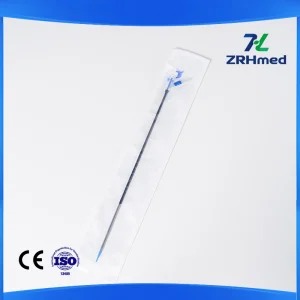
While less common for traditional 'biopsy forceps' in the GI sense, urology utilizes specialized instruments for tissue acquisition during cystoscopy and ureteroscopy. This includes samples for diagnosing bladder cancer, tumors in the urinary tract, and other anomalies. Ureteral access sheaths and similar devices are crucial for facilitating these procedures.
Beyond simple diagnosis, endoscopic biopsy tools are integrated into therapeutic procedures. For example, during Endoscopic Retrograde Cholangiopancreatography (ERCP), tissue samples might be taken from suspicious lesions in the bile ducts or pancreas. Similarly, in Endoscopic Mucosal Resection (EMR) and Endoscopic Submucosal Dissection (ESD), tissue is removed and often sampled.
The evolution of endoscopy with biopsy technology is rapid, driven by clinical needs and technological innovation. Staying ahead means understanding these key development trajectories.
AI is increasingly being used for real-time lesion detection, characterization, and guidance during biopsy procedures. Machine learning algorithms can analyze endoscopic images to identify subtle abnormalities that might be missed by the human eye, leading to earlier and more accurate diagnoses. This enhances the diagnostic yield of every biopsy.
Development of more sophisticated biopsy instruments, such as endoscopic ultrasound-guided fine-needle aspiration (EUS-FNA) needles, high-frequency ultrasound probes integrated into endoscopes, and advanced forceps with improved capture mechanisms, are enabling clinicians to obtain larger or more representative tissue samples, crucial for definitive diagnosis, especially for complex or deep-seated lesions.
The trend towards single-use endoscopic accessories continues to grow, driven by the need to eliminate risks of cross-contamination and the burden of reprocessing. Manufacturers are innovating in sterile packaging and material science to deliver high-performance disposable biopsy devices that ensure patient safety and procedural efficiency.
International distributors, hospitals, and healthcare systems seek reliable manufacturers offering high-quality, compliant, and cost-effective endoscopy with biopsy solutions.
Procurement professionals prioritize manufacturers that demonstrate consistent quality control, robust E-E-A-T principles, and reliable product performance. Devices must be sterile, precisely manufactured, and undergo rigorous testing to ensure patient safety and procedural success.
CE marking, FDA clearance, and ISO 13485 certification are non-negotiable. Buyers require comprehensive documentation, including Certificates of Conformity, Declarations of Material, and support for local registration processes. Transparency in quality management is paramount.
The ability to supply large quantities of high-quality biopsy devices at competitive prices is a key requirement. Manufacturers with efficient production capabilities and established supply chains are preferred for long-term partnerships, enabling consistent stock availability and better cost management for buyers.
Distributors and brand owners often seek partners for OEM/ODM services. Manufacturers that offer flexible customization, private labeling, and responsive technical support for product development and registration processes are highly valued.
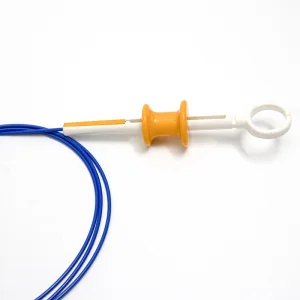
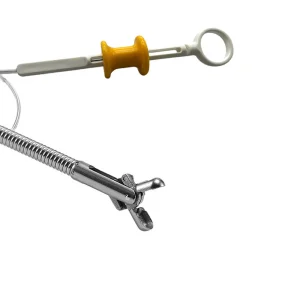
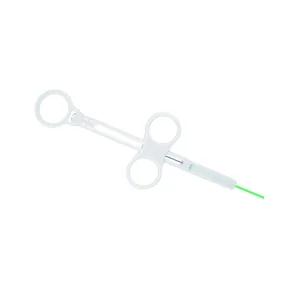
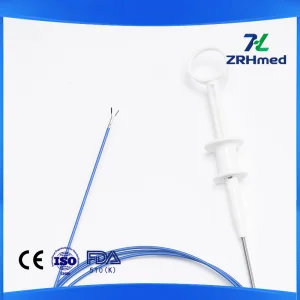
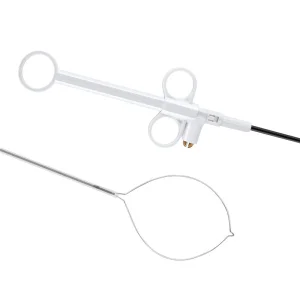
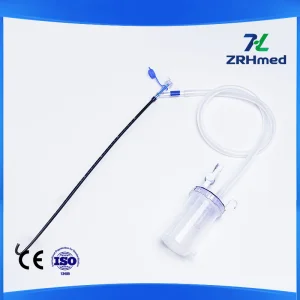
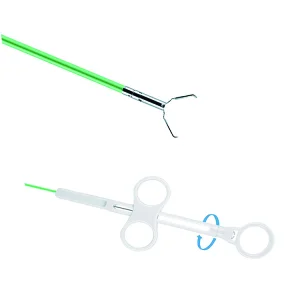
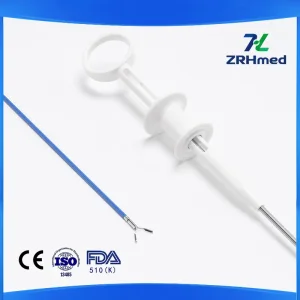
We specialize in a comprehensive range of disposable biopsy forceps, including standard jaw, serrated jaw, jumbo, fenestrated, and pediatric models. We also offer hot biopsy forceps for cauterization, and specialized forceps for bronchoscopy and urology. Our products are designed for optimal tissue capture and minimize trauma.
Selection depends on the endoscopic channel diameter, the type of lesion, and the desired sample size. Factors to consider include jaw type (e.g., serrated for firmer tissue, fenestrated for larger samples), working length, and whether a needle is required for aspiration. Our sales team can provide detailed guidance and product recommendations based on your specific requirements.
Our primary focus is on high-quality, single-use disposable biopsy forceps. This approach eliminates the risk of cross-contamination and the need for complex reprocessing, ensuring maximum patient safety and procedural efficiency. We adhere strictly to the sterile, single-use model for all our biopsy devices.
Our endoscopy with biopsy devices are manufactured under strict quality management systems and hold CE certification for European markets. We also pursue FDA registration for products destined for the United States. We provide comprehensive documentation to support our clients' import and registration needs in their respective regions.
Explore our range of high-quality, CE-certified endoscopy with biopsy devices, manufactured to exacting standards for global distribution and OEM partnerships.