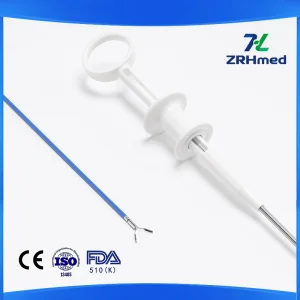
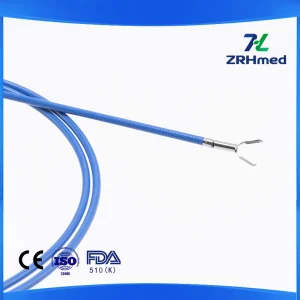
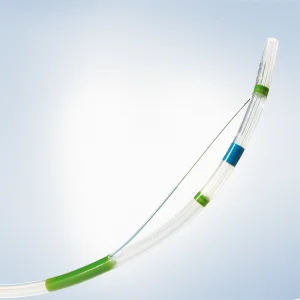
Explore precision-engineered single-use devices, compliant with strict ISO 13485 and CE standards for interventional gastroenterology.
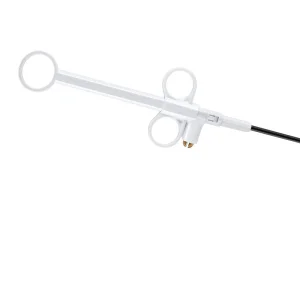
Analyzing clinical evidence, procurement standards, and safety advancements across global endoscopy markets.
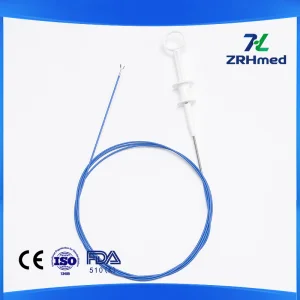
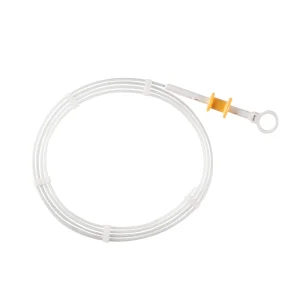
In modern gastrointestinal interventional therapy, Cold Snare Endoscopic Mucosal Resection (Cold Snare EMR or CSP) has evolved from an emerging technique to the primary standard of care for sessile serrated lesions (SSLs) and colorectal polyps measuring under 10mm–20mm. Historically, thermal electrocautery was routinely used, carrying a documented risk of delayed post-polypectomy bleeding (PPB), thermal transmural injury, and bowel perforation. Cold Snare EMR relies on high-shear mechanical guillotine force without high-frequency electrical energy, drastically mitigating thermal dispersion risks into the muscularis propria.
For hospital purchasing consortia, health ministries, and specialized ambulatory surgical centers (ASCs), sourcing from reliable cold snare EMR suppliers involves assessing strict metallurgical formulations, ultra-fine cutting-wire tolerances, and complete mechanical tactile transmission down long, tortuous colonoscopic loops.
By eliminating electrocautery, Cold Snare EMR removes risks of delayed thermal perforation and post-polypectomy syndrome, making outpatient interventions significantly safer.
Shorter intervention cycles optimize room turnaround times in high-volume endoscopic units, dramatically lowering disposable overhead costs per resected polyp.
Thin braided wire configurations allow clean, clean-cut resection lines, delivering unburned histological margins that permit accurate pathological staging.
How top-tier medical device distributors vet high-capacity cold snare manufacturers for quality, compliance, and clinical performance.
Medical-grade surgical stainless steel wire and proprietary braided nitinol alloys guarantee elasticity without permanent loop deformation after complex polyps.
Multi-durometer outer coil jackets mitigate sheath kinking inside acute endoscope tip deflections, preserving smooth single-handed operation.
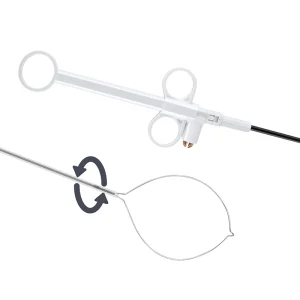
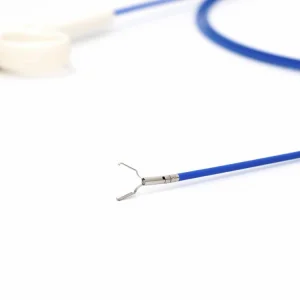
Diamond, oval, and crescent profiles with 9mm, 10mm, and 15mm diameters ensure steady mucosal grasp without tissue slippage during snare closure.
Validated 100% Ethylene Oxide (EO) sterilization compliant with ISO 11135 and comprehensive ISO 10993 cytotoxicity and hemocompatibility dossiers.
Integrating next-generation manufacturing technologies to raise the bar for mucosal resection efficacy.
Advanced wire-drawing and multi-strand micro-braiding reduce cutting friction by 35%, ensuring precise clean guillotine resection through fibrotic base tissue without tissue dragging.
Micro-etched wire topography stabilizes the snare opening during mucosal positioning, minimizing loop slide-off during resection of flat sessile polyps.
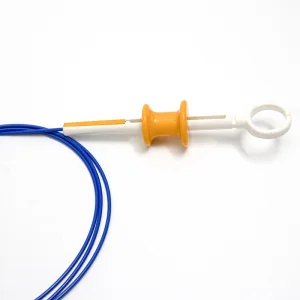
Lightweight, high-sensitivity injection-molded handles allow responsive actuation, giving the endoscopist direct tactile feedback at polyp transsection.
Meeting the multi-regional compliance criteria demanded by health authorities across the EU, North America, Latin America, and the Asia-Pacific region.
Full technical documentation, Post-Market Clinical Follow-up (PMCF) plans, and notified-body oversight guaranteeing compliance across all European Economic Area member states.
Audited Quality Management System spanning incoming raw material inspection, automated cable assembly, in-process tensile verification, and cleanroom bioburden monitoring.
Custom packaging, multilingual IFUs, certificates of free sale (CFS), and localized technical dossiers tailored for rapid national clearance in Brazil (ANVISA), Mexico (COFEPRIS), and Southeast Asia.
Comprehensive answers to frequent clinical, engineering, and commercial inquiries.
Cold snares feature a significantly thinner, high-tensile wire profile (typically under 0.24mm-0.30mm) designed to cleanly transect tissue purely via mechanical shear force. Hot snares utilize thicker braided cables to conduct electrosurgical current without snapping, which can crush mucosal margins if closed cold without electrocautery.
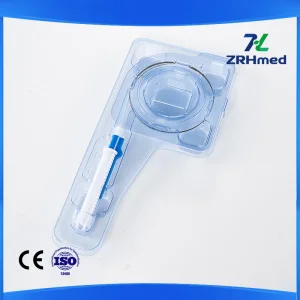
Yes. We support custom wire cross-sections, distinct loop forms (diamond, shield, oval), tailored catheter sheath lengths (1800mm to 2300mm), and complete private label blister packaging with client-specific barcoding, IFUs, and brand styling.
Our Cold Snare EMR portfolio is engineered with standard 2.3mm to 2.4mm outer catheter diameters, offering smooth, low-friction passage through standard 2.8mm colonoscope working channels, even in fully retroflexed scope orientations.
Each batch undergoes rigid destructive tensile testing, actuation fatigue evaluation up to 50 continuous cycles, and validated EO sterilization conforming to ISO 11135 standards with complete biological indicator tracking and residual monitoring.
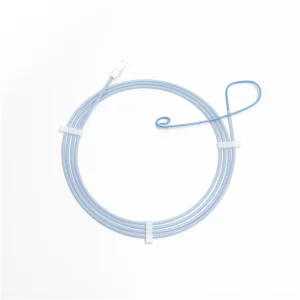
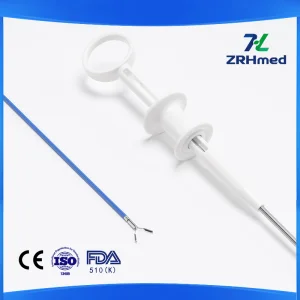
Integrated consumables designed to pair with Cold Snare EMR, ESD, and interventional ERCP setups.