Explore clinical devices manufactured under strict ISO 13485:2016 quality systems, engineered for zero-compromise trackability, pushability, and mucosal protection.
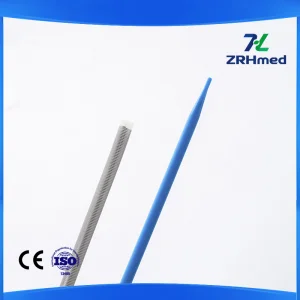
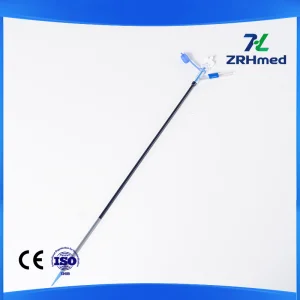
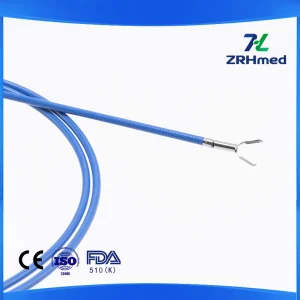
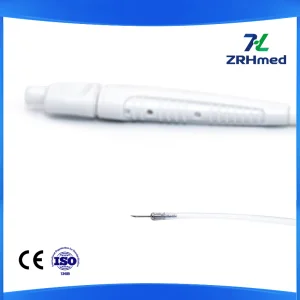
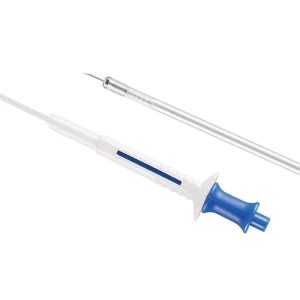
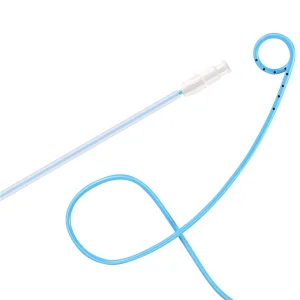
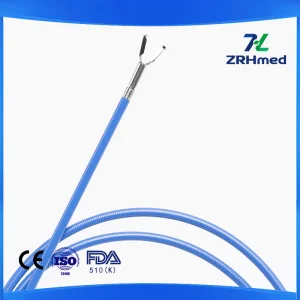
In modern interventional medicine, clinical success pivots upon the immediate crossing of tortuous anatomical boundaries without iatrogenic injury.
Uncoated or sub-optimally lubricated guidewires generate micro-shear forces along delicate urethral, ureteral, and biliary endothelia. By applying covalently bonded polyvinylpyrrolidone (PVP) hydrogel matrices, our hydrophilic coated wires achieve a steady-state dynamic coefficient of friction (COF) below 0.01 upon aqueous activation, significantly eliminating friction-induced tissue trauma, mucosal denudation, and reactive stricture formation.
Navigating impacted calculus in the distal ureter or strictured intrahepatic bile ducts demands an exacting balance of lateral flexibility and linear pushability. Our centerless-ground superelastic Nitinol cores exhibit progressive distal taper profiling, translating distal tip tactile feedback directly to the operator's hands while preventing catastrophic wire buckling during tight stenotic lesion traversal.
Guidewires serve as the foundational rail for high-cost secondary instruments, including ureteral access sheaths, dilation balloons, sphincterotomes, and extraction baskets. A durable hydrophilic coating guarantees that sequential catheter exchanges can occur smoothly across complex cases without stripping coating fragments or causing device entrapment within scope working channels.
The global interventional guidewire and endoscopic accessory market is experiencing unprecedented demand, projected to surpass USD 3.2 billion by 2030. Driven by the worldwide acceleration of minimally invasive surgical procedures, ambulatory surgical centers (ASCs), and stringent hospital infection control initiatives, procurement paradigms have permanently shifted from reusable assemblies to single-use, high-precision sterile consumables.
Historically, global supply has been constrained by tier-one multi-national corporations charging immense brand premiums. Today, tier-one medical device factories like ZhuoRuiHua Medical have bridged the clinical-grade engineering divide. By integrating automated centerless grinding, precision jacket co-extrusion, continuous cleanroom plasma surface modification, and automated UV polymer grafting under a single roof, we empower global brand owners and distributors to achieve 40–60% manufacturing margin improvements while maintaining equivalent or superior clinical trackability and tensile safety.
A rigorous examination of core alloy metallurgy, crosslinked polymer chemistry, and mechanical validation protocols underpinning our guidewire factory lines.
The structural core comprises a high-purity medical-grade Nickel-Titanium (Nitinol, ~55.8 wt% Ni) binary alloy manufactured to ASTM F2063 specifications. Nitinol's stress-induced martensitic transformation allows up to 8% elastic strain recovery without plastic deformation—orders of magnitude superior to traditional 304V stainless steel.
Our computer-controlled multi-stage centerless grinding machinery executes sub-micron precision tapers, sculpting parabolic distal profiles that preserve 1:1 torsional transmission ("torqueability") while ensuring an ultra-soft, atraumatic tip for traversing fragile anatomical structures.
To establish structural bulk and radiopacity without compromising core elasticity, the ground Nitinol wire is enveloped in a proprietary thermoplastic polyurethane (TPU) or fluorinated ethylene propylene (FEP) jacket via continuous high-speed melt extrusion.
Micro-dispersed Tungsten (W) or Barium Sulfate (BaSO4) particles within the distal polymer formulation guarantee distinct, flicker-free fluoroscopic visualization under low-dose C-arm imaging, empowering clinicians to verify tip orientation and stricture positioning instantly.
Rather than unstable physical dip-coatings prone to flaking and particulate shedding, our production facility utilizes atmospheric glow plasma surface activation followed by continuous pulsed UV photo-chemical graft polymerization. High-molecular-weight Polyvinylpyrrolidone (PVP) chains are chemically grafted to the jacket substrate.
When exposed to physiological saline or blood, the hydrophilic polymer entrains water molecules through hydrogen bonding, forming a macroscopic aqueous hydrogel layer that dramatically minimizes solid-to-solid contact friction.
We provide full-scope technical documentation, biological evaluation reports, and manufacturing batch traceability to accelerate your localized market entries.
Precision wire specifications matched directly to the high-torque, acute-angle challenges encountered by interventionists daily.
During flexible ureterorenoscopy, the wire must negotiate tight, edematous ureteral lumens without pushing ureteral stones back into renal calyces unintentionally or perforating the ureteral wall. Our hydrophilic coated wires provide low-profile entry (0.032" / 0.035"), effortlessly establishing access for negative-pressure suction ureteral sheaths and permitting repeated flexible scope passage without losing track stability.
Cannulating the Ampulla of Vater and achieving selective common bile duct (CBD) access requires rapid, responsive wire handling through an elevated duodenoscope elevator. Our hydrophilic wires feature a high-torque Nitinol core that responds instantly to 1:1 rotation, preventing false duct tracking into the pancreatic duct and facilitating rapid delivery of sphincterotomes, extraction balloons, and pigtail stents.
From percutaneous nephrostomy (PCN) drainage to gastrointestinal dilation across malignant stenoses, our heavy-duty and stiff-shaft hydrophilic variants provide the requisite columnar stability. They eliminate wire prolapse when introducing rigid dilators, large-caliber trocars, or metallic stents through fibrous or calcified tissue tracks.
Continuous investment in surface chemistry and sensor integration to pioneer the next decade of medical device safety.
Regulatory authorities, including the US FDA, have heightened scrutiny on coating particulate delamination during endovascular and endourological interventions. Our engineering team has developed a covalent interpenetrating polymer network (IPN) that anchors hydrophilic chains directly to the underlying matrix, decreasing sub-visible particulate counts by 75% under USP <788> laser obscuration testing.
Post-operative catheter-associated infections represent a substantial clinical burden. In laboratory development, we are validating dual-action hydrophilic coatings infused with immobilized antimicrobial peptides (AMPs) and zwitterionic polymer brushes that resist bacterial colonization (Pseudomonas aeruginosa, E. coli) without inducing cytotoxic reactions in local host tissues.
Transitioning beyond statistical manual sampling, our manufacturing plant incorporates 360-degree inline telecentric optical machine-vision systems. Powered by deep neural networks trained on tens of thousands of wire surface scans, the automated system continuously identifies coating voids, micro-bubbles, and dimensional fluctuations at micron resolution in real time.
Direct technical and logistical clarity for procurement directors, product managers, and regulatory engineers evaluating our manufacturing capabilities.
Our guidewires undergo standardized pinch-force friction testing in continuous heated saline baths (37°C) following ASTM F2394 protocols. Lubricity is measured via load cells recording pulling force over a minimum of 25–30 cycles. A high-grade hydrophilic coating maintains an average pulling force under 0.05 N with zero upward friction drift, demonstrating that the polymer chain remains chemically bonded without delaminating under repeated instrument exchanges.
Particulate evaluation is executed via simulated anatomical track models coupled with light obscuration particle counters per USP <788> and ASTM F2743. Because our factory utilizes covalently grafted UV polymerization rather than physical dips, particulate generation for particles ≥10 μm and ≥25 μm falls significantly below international threshold limits. Complete particulate validation test reports are provided within technical dossiers for your regulatory submission.
We manufacture guidewires spanning outer diameters from 0.018", 0.025", 0.028", 0.032", 0.035", up to 0.038", with lengths extending from 80 cm to 450 cm. Core options encompass Superelastic Nitinol or high-tensile 304V Stainless Steel. Tip designs include atraumatic straight, angled (30°/45°), and J-curved geometries with customizable floppy tip lengths ranging from 3 cm to 15 cm, finished in solid black, yellow/black zebra, or radiopaque jacket stripes.
Our sterile single-use devices hold validated shelf lives of 3 to 5 years, verified via rigorous accelerated aging (ASTM F1980) and concurrent real-time aging studies. Packaging configurations feature Tyvek®-to-film breathable sterile barrier pouches housed within individual protective coils, ensuring zero coating degradation, moisture ingress, or pouch micro-channeling post-EO sterilization (ISO 11607).
We offer comprehensive private-label OEM solutions, including custom IFUs (Instructions for Use) in regional languages, client-specific primary and secondary box artwork, Unique Device Identification (UDI) barcoding (GS1 format), and tailored master carton shipping configurations. Our technical team works alongside your regulatory staff to provide Certificates of Free Sale (CFS), ISO 13485 documentation, and technical construction files.
Engineered to interface seamlessly with standard flexible endoscopes, nephroscopes, and ureteroscopes across routine and complex therapeutic applications.
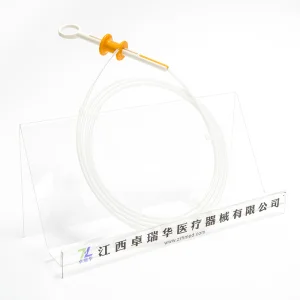
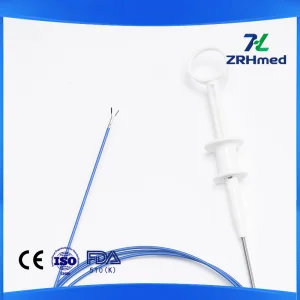
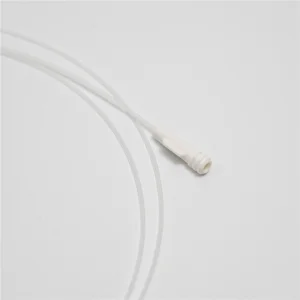
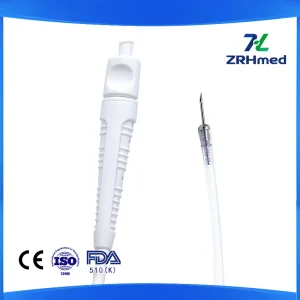
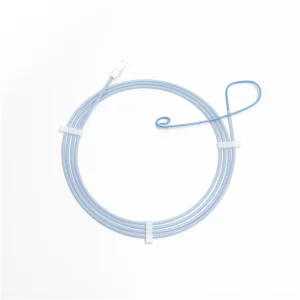
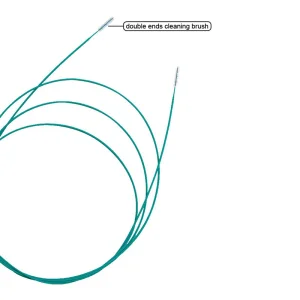
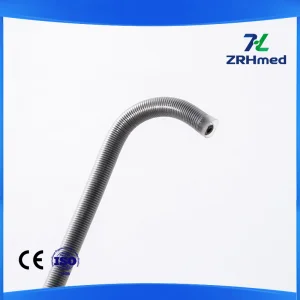
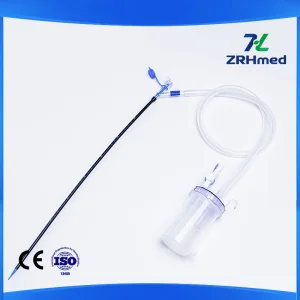
Whether you require full-scale contract manufacturing under your regional brand, customized guidewire core tapers, or certified bulk components for local kit assembly, our engineering and regulatory teams deliver end-to-end technical excellence.
