Precision single-use clinical tools designed for frictionless trackability through working channels. Fully audited to international biocompatibility standards.
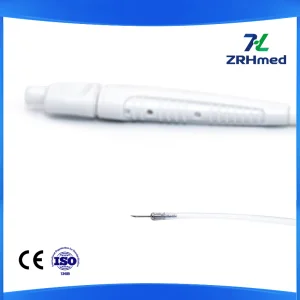
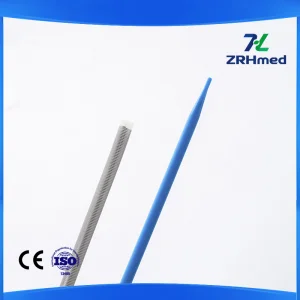
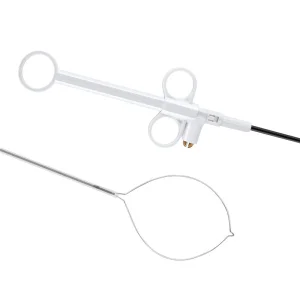
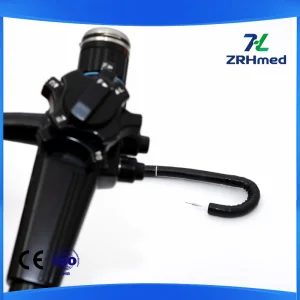
Evaluating structural supply chain dynamics, technological transitions from stainless steel to superelastic Nitinol, and the soaring demand for specialized micro-access systems.
The global interventional guidewire sector is projected to surpass $3.8 billion by 2030, driven by an aging global population and the rapid clinical shift from open surgical procedures toward minimally invasive endotherapy. Emerging healthcare hubs in APAC and LATAM are driving volume expansion.
While legacy conglomerates have maintained market dominance through multi-tier distribution channels, leading tier-1 hospital systems and regional brand holders are increasingly sourcing directly from specialized medical device manufacturers like Jiangxi ZhuoRuiHua Medical Instrument Co., Ltd. (ZRH Med).
The enforcement of the EU Medical Device Regulation (MDR 2017/745) and stringent FDA post-market surveillance have elevated technical requirements for guidewire suppliers. Manufacturers must prove chemical bonding integrity of coatings and microscopic particulate shedding limits under simulated clinical tortuosity.
Balancing tactile feedback, columnar strength, and atraumatic flexibility requires complex micro-machining and advanced surface polymer chemistry.
The heart of a high-performance guidewire is its core mandrel. While medical-grade 304V stainless steel provides high pushability and tactile transmission, it suffers from plastic deformation when bent past critical thresholds. We utilize superelastic Nickel-Titanium (Nitinol) alloys engineered via precision thermal processing. Nitinol displays a reversible austenitic-to-martensitic phase transition, allowing the wire to withstand severe anatomical loops without permanent kinking—a critical safeguard during selective biliary cannulation and tortuous ureteral navigation.
Precision centerless micro-grinding tapers the distal Nitinol core into parabolic profiles, translating proximal clinician hand rotations into exact 1:1 distal tip movement with zero rotational whip.
Friction within an endoscope working channel or stenotic lumen leads to buckling and microvascular trauma. Our engineering incorporates a proprietary dual-layer jacket: a secure Polytetrafluoroethylene (PTFE) or Polyurethane (TPU) outer sheath permanently bonded to a photo-cured hydrophilic polymer matrix (polyvinylpyrrolidone - PVP).
When hydrated by saline or body fluids, the hydrophilic matrix swells into a hydrogel layer that reduces the kinetic coefficient of friction below 0.05. This allows our guidewires to effortlessly track across difficult strictures while rigorous UV-curing processes mitigate the risk of micro-particulate shedding.
| Guidewire System | Core Material | Outer Diameter (inch) | Coating Architecture | Tip Flexibility Profile | Primary Clinical Target |
|---|---|---|---|---|---|
| ERCP Hydrophilic Guidewire | Superelastic Nitinol | 0.025" / 0.035" | PTFE Shaft + Distal Hydrophilic PVP | Angled / Straight Floppy Tungsten Tip | Biliary Cannulation & Sphincterotomy |
| Endourology Access Wire | Hybrid Nitinol / Pt-W Coil | 0.032" / 0.038" | Full-Length Hydrophilic Polymer | Atraumatic J-Tip & Straight Flexible | Ureteral Stricture Dilation / Sheath Rail |
| Vascular Interventional Wire | Micro-Tapered Nitinol Mandrel | 0.014" / 0.018" | Lubricious Covalently Bonded Hydrogel | Shapeable Radiopaque Platinum Core | Peripheral Vessel Occlusion Crossing |
| Pulmonary Bronchial Wire | High-Tensile 304V / Nitinol Core | 0.021" / 0.028" | Low-Friction Fluoropolymer Sleeve | Ultra-Soft Rounded Atraumatic Tip | Transbronchial Biopsy & Stent Delivery |
Different anatomical environments demand differentiated balance of radiopacity, column strength, and tip shape retention.
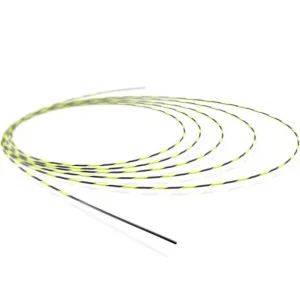
During Endoscopic Retrograde Cholangiopancreatography, selecting the common bile duct rather than the pancreatic duct requires high tip steerability. Our ERCP guidewires integrate distinct dual-color spiral jackets (e.g., yellow/black striped) to supply endoscopic visualization of wire rotation and linear progress under fluoroscopy.
In retrograde intrarenal surgery (RIRS) and flexible ureteroscopy, guidewires must provide reliable rail support for ureteral access sheaths without puncturing mucosal linings. Our hydrophilic urological access guidewires feature gradual transition zones preventing wire deflection and false passage creation.
Guidewires act as structural conduits in esophageal, gastric, and colonic luminal reconstruction. From stabilizing dilation balloons across strictures to guiding retrieval devices following complex polypectomies, structural stiffness is engineered to prevent loop formation within wider cavities.
Bronchoscopic navigation through tortuous peripheral subsegmental bronchi requires ultra-flexible calibers. Radiopaque distal markers allow precise real-time guidance under cone-beam CT or fluoroscopy, facilitating rapid peripheral lung lesion biopsies and bronchial stent deployments.
Hospital tenders and regulatory audits require end-to-end traceability. We maintain strict vertical integration from raw wire drawing to final sterile barrier testing.
Our manufacturing site features automated production lines enclosed within certified ISO Class 8 (Class 100,000) cleanrooms. Precision micro-grinding, polymer jacket extrusion, and ultrasonic cleaning stages are monitored by continuous environmental control to minimize bioburden and particulate contamination.
Sterility assurance complies with ISO 11135:2014 standards, achieving a Sterility Assurance Level (SAL) of 10⁻⁶. Our aeration protocols ensure residual Ethylene Oxide (EO) and Ethylene Chlorohydrin (ECH) levels remain significantly lower than standard international medical safety thresholds.
Every guidewire batch undergoes optical non-contact laser micrometer scanning across its entire working length to guarantee 0.0005-inch diameter tolerances. Destructive pull-testing ensures junction welds between core wires, coils, and distal tips exceed standard tensile rupture limits.
Pioneering smart-sensor integration, biomimetic lubricating coatings, and advanced micro-deflection mechanisms.
Next-generation guidewire prototypes integrate sub-millimeter fiber-optic Bragg gratings (FBG) and piezo-electric transducers directly into the distal core. This provides live fractional flow reserve (FFR) calculations, intraluminal pressure readings, and automated stricture resistance quantification without exchanging catheters.
To further curb micro-particulate generation during complex procedures, R&D is focused on interpenetrating polymer network (IPN) hydrogels mimicking articular cartilage lubricating mechanisms. These covalently tethered networks survive repeat passes through tough calcified strictures without peeling.
As robotic-assisted endoscopy and vascular systems enter operating suites, guidewires require ultra-consistent torsional stability without backlash. Our engineering roadmap includes tailored stiffness gradients designed specifically for automated robotic manipulation consoles.
Clear answers to questions regarding OEM custom lengths, core alloy choices, coating certifications, and import registrations.
Explore our full line of sterile CE-certified products engineered to optimize interventional clinical outcomes.
Whether you are sourcing direct factory inventory to participate in national healthcare tenders or looking to develop custom private-label guidewire specifications, our engineering and regulatory affairs teams provide complete OEM/ODM technical support.