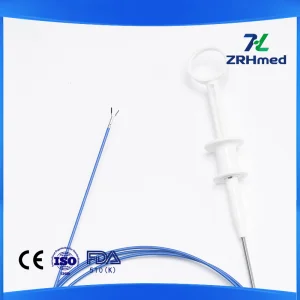
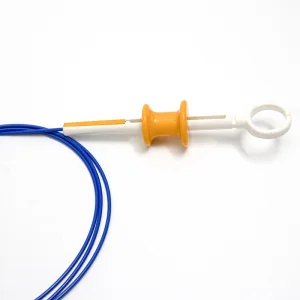
Explore our foundational range of cleanroom-manufactured consumables engineered for GI endoscopy, endourology, tissue acquisition, and strict infection prevention control.
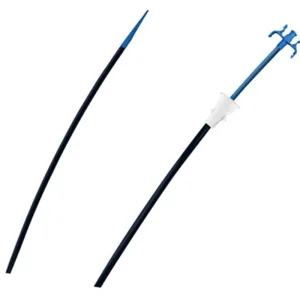
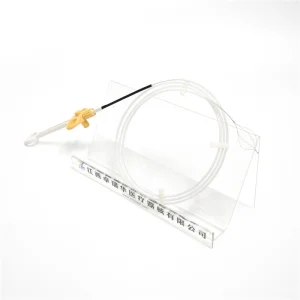
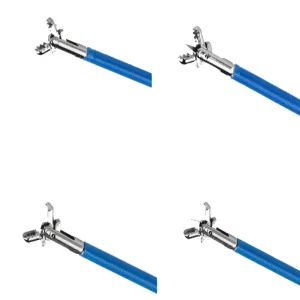
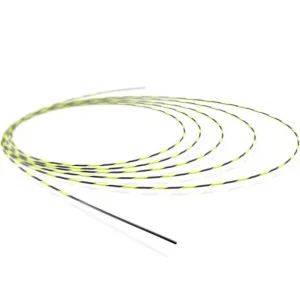
In modern interventional endoscopy, procedural efficacy is fundamentally constrained by reprocessing integrity. Mechanical cleaning remains the irreplaceable first line of defense against healthcare-associated infections (HAIs) and multidrug-resistant pathogens.
Flexible endoscopes—including gastrointestinal video gastroscopes, colonoscopes, duodenoscopes, and ultra-thin flexible bronchoscopes—possess tortuous internal working channels that range from 1.2 mm to 4.2 mm in inner diameter and extend upwards of 2.3 meters in length. During diagnostic and therapeutic interventions, these micro-lumens are subjected to extensive organic contamination comprising blood, bile, mucin, cellular debris, and microbial pathogens. Multisociety guidelines, including stringent recommendations from the American Society for Gastrointestinal Endoscopy (ASGE), European Society of Gastrointestinal Endoscopy (ESGE), and AAMI ST91, state unequivocally that chemical high-level disinfection (HLD) or low-temperature liquid chemical sterilization is biologically invalid if preceding manual mechanical friction fails to eradicate bioburden and disrupt mature biofilm matrices.
An original design manufacturer (ODM) of endoscope cleaning brushes does not merely supply an extrusion of wire and bristles; the factory engineers a precision mechanical debridement instrument. If bristles lack radial stiffness, they bend irreversibly inside the lumen, hydroplaning over mucosal biofilms without applying adequate frictional shear stress. Conversely, if bristle filaments are excessively abrasive or the central metal core contains microscopic burrs, the device will gouge the polytetrafluoroethylene (PTFE) or fluorinated ethylene propylene (FEP) internal channel liner. These microscopic scratches generate sheltered ecological niches where Pseudomonas aeruginosa, Klebsiella pneumoniae, and Carbapenem-Resistant Enterobacteriaceae (CRE) anchor themselves, rendering downstream enzymatic baths and automated endoscope reprocessor (AER) cycles futile. Hence, institutional healthcare providers, multinational OEM brands, and medical distributors are shifting decisively toward automated, medical-grade ODM manufacturers capable of producing high-performance, single-use endoscopic cleaning and cytology brushes at clinical scale.
Clinical Truth: Disinfection destroys microorganisms; manual brushing removes the organic matter that shields them. Without standardized, validated brush geometry and filament density, no endoscope reprocessor in the world can guarantee sterility assurance levels (SAL 10-6).
Chinese advanced medical device engineering clusters combine world-class polymer extrusion, precision metallurgy, automated micro-tufting, and end-to-end quality systems to deliver exceptional OEM/ODM value.
Integration of high-tensile 304V/316L medical-grade stainless steel cores, shape-memory superelastic Nitinol wire shafts, and imported medical-grade DuPont Nylon 6/12 filaments ensures consistent flexural memory without kink-induced channel damage.
Production facilities operate automated bristle-tufting, laser-welded ball tip forming, and ultrasonic degreasing inside Class 100,000 (ISO Class 8) controlled environments, minimizing particulate contamination prior to ethylene oxide (EO) sterilization.
Direct in-house tool building, sheath extrusion (PE, PTFE, hydrophilic coatings), and automated packaging lines deliver 35% to 55% operational cost advantages over European and North American converters, empowering distributor tender competitiveness.
A surgical-grade brush must withstand extreme multi-axial mechanical tortuosity while maintaining 360-degree circumferential contact across varied internal geometries.
The distal extremity of an endoscope channel brush is the highest-risk element for channel puncture or scratching. Traditional reusable brushes employed glued plastic caps that routinely detached inside flexible endoscopes during reprocessing, requiring emergency clinical interventions or costly channel relining ($4,000–$8,000 per incident). Advanced ODM production utilizes micro-plasma or precision laser melting to form an integral, spherical ball tip directly on the twisted stainless steel core. The resulting welded bead exhibits a mirror-polished microfinish (Ra < 0.2 µm) with zero sharp edges, smoothly deflecting off channel bends, biopsy port transitions, and elevator recess junctions.
The transmission of pushability and trackability through an endoscope measuring 2,300 mm in working length requires optimal core wire engineering. Our factory manufactures two core architectures:
Bristle materials must provide chemically inert stability across broad pH spectrums (pH 2 to pH 12) encountered during exposure to enzymatic detergents and alkaline pre-cleaners. We specify medical-grade Nylon 6/6 and DuPont Tynex® filaments with specialized characteristics:
Tensile Reliability: Full assembly pull-force testing exceeds ISO standards, ensuring the bristle bundle and distal tip will not detach under longitudinal tensile forces up to 35N during tight-radius retroflexion extraction.
| Brush Category | Working Channel Ø | Total Sheath Length | Bristle Outer Ø | Target Clinical Endoscope | Key Mechanical Attributes |
|---|---|---|---|---|---|
| Ultra-Slim Broncho Brush | 1.2 mm – 2.0 mm | 1,050 mm – 1,200 mm | 2.0 mm – 3.0 mm | Flexible Bronchoscopes, Pediatric Scopes | Ultra-fine 0.05 mm nylon filaments, super-flexible micro-core, laser welded tip. |
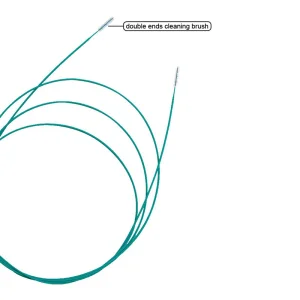
| Standard GI Channel Brush | 2.8 mm – 3.7 mm | 1,600 mm – 2,300 mm | 5.0 mm – 6.0 mm | Gastroscopes, Colonoscopes, Enteroscopes | Double-ended dual brush heads, kink-resistant PE sheath, anti-spray pull design. |
| Duodenoscope Elevator Brush | Elevator Recess | 250 mm – 400 mm | Specialized Angled | ERCP Duodenoscopes (Side-Viewing) | High-density crimped nylon, compact rigid shaft for targeted mechanical scrubbing. |
| Dual-Ended Valve / Button Brush | Valve Cylinders | 120 mm – 180 mm | 9.0 mm / 11.0 mm | Suction, Air/Water & Biopsy Valve Bodies | Double-ended design: circular cylinder brush at end A, flat contour brush at end B. |
| Cytology Sampling Brush | 2.0 mm – 2.8 mm | 1,800 mm – 2,400 mm | 2.5 mm – 3.5 mm | GI, Pulmonary Diagnostic Histology | Retractable protective PTFE sheath, radiopaque marker ring, high cell-yield geometry. |
Targeted brush designs engineered for high-consequence anatomy and complex device pathways across gastroenterology, pulmonary medicine, and surgical suites.
Long working lengths (up to 2,300 mm) navigating tortuous bowel loops demand high torque transfer and column strength. Dual-ended cleaning brushes double cleaning contact per pass, reducing processing times while fulfilling strict hospital infection control audits.
The complex mechanical articulation of the Albarran elevator lever is notorious for fatal CRE outbreaks. ODM elevator brushes feature short, ultra-dense bristle heads and stiff shafts engineered specifically to scrub behind and underneath the elevator lever.
Bronchoscope channels down to 1.2 mm require delicate 0.05 mm bristles that debride tenacious bronchial secretions and blood without placing radial stress on thin elastomeric inner channel linings or causing distal tip dislodgement.
How international distributor networks, hospital procurement groups, and OEM brand holders evaluate contract manufacturing capabilities for regulated medical markets.
When selecting an ODM brush partner in China, international regulatory teams require exhaustive documentation under the European Medical Device Regulation (EU) 2017/745 (MDR) and US FDA 21 CFR Part 820. Key technical file components include:
Our manufacturing facility provides end-to-end white-label and contract engineering programs tailored to brand-owner design history files (DHF):
Supply Chain Security: Our factory maintains strategic reserves of medical-grade stainless steel wire and virgin medical nylon resin, guaranteeing stable pricing structures, predictable production schedules, and rapid lead-time execution for high-volume tender commitments.
Direct technical answers addressing regulatory verification, mechanical performance, customization limits, and clinical risk mitigation.
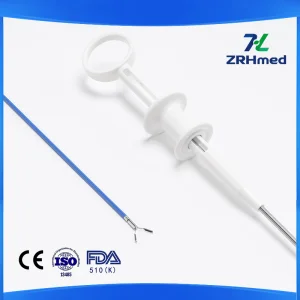
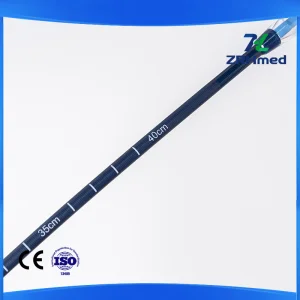
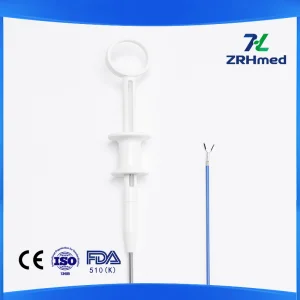
Complementary single-use therapeutic accessories manufactured in ISO 13485 cleanroom facilities for distributors and private-label partners globally.