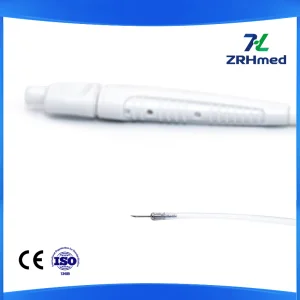
Verified clinical consumables delivering torque responsiveness, hydrophilic lubricity, and unmatched device compatibility.
Navigating the regulatory evolution, supply chain integration, and cost-containment imperatives reshaping minimally invasive surgery.
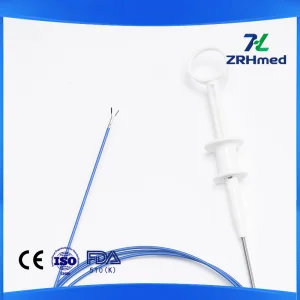
Across modern healthcare delivery networks, the demand for minimally invasive interventions (MII) in gastrointestinal endoscopy and endourology is accelerating at an unprecedented compound annual growth rate. Global healthcare payers, outpatient surgical hubs, and hospital syndicates face dual pressures: optimizing clinical procedural success while driving down procurement costs per case. Guidewires—specifically Polytetrafluoroethylene (PTFE) jacketed and Nitinol-core wires—serve as the foundational access tool upon which all exchange catheters, stone extraction devices, and stents rely.
Historically dominated by tier-one brand conglomerates, the guidewire market is undergoing a structural realignment toward vertically integrated ODM (Original Design Manufacturer) and OEM supply chain models. OEMs and medical device brands are shifting from simple contract assembly to deep ODM partnerships capable of managing micro-diameter wire drawing, specialized PTFE coating adhesion, tip jacket formulation, and automated hydrophilic coating in cleanroom environments certified to ISO Class 8 or Class 7 standards.
Global logistics volatility has forced medical device distributors to eliminate fragmented Tier-2 and Tier-3 vendors. Consolidating guidewire manufacturing under dedicated facilities with automated testing protocols mitigates shipment delays and protects baseline tender allocations.
The regulatory barrier imposed by the European Union Medical Device Regulation (EU MDR 2017/745) and equivalent global frameworks has exposed uncertified suppliers. Reliable ODM partners must provide clinical evaluation reports (CER) and robust risk management files.
Factory-direct ODM production bypasses the markups of multiple intermediaries. Distributors gain the margin elasticity required to capture state and municipal public tenders without sacrificing technical performance metrics.
A rigorous examination of core metallurgy, polymer jacketing technology, and precision tip design.
Constructed from high-grade Nickel-Titanium alloy offering shape memory and kink-free recovery. Ensures the wire negotiates tortuous anatomies, including acute ureteral angles and narrow biliary strictures, without permanent bending.
Applied via precision heat-shrink extrusion or uniform dispersion coating. Provides dry lubricity across the entire working shaft, resisting flaking or peeling while facilitating instrument passage through working channels.
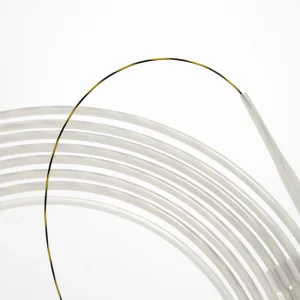
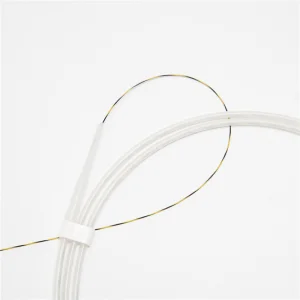
Alternating high-contrast spiral striping (black and white or blue and white) delivers immediate fluoroscopic and endoscopically visible motion feedback, allowing the surgeon to assess wire progression and device pushability.
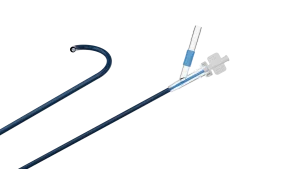
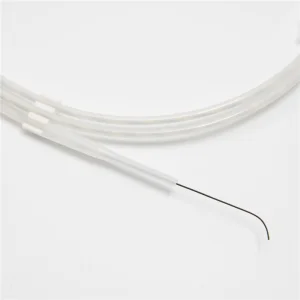
Engineered with tapered core tapers and rounded tungsten-loaded or platinum-coiled soft distal tips (straight or angled J-tip configurations), mitigating the risk of tissue perforation during delicate cannulation.
Tailored mechanical specifications addressing high-complexity therapeutic pathways across urology and gastroenterology.
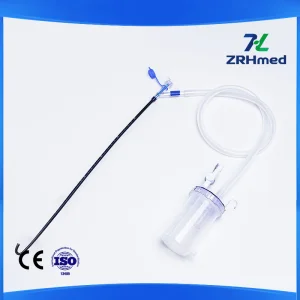
In Retrograde Intrarenal Surgery (RIRS) and Percutaneous Nephrolithotomy (PCNL), the 0.035" and 0.038" zebra PTFE guidewire provides a stable rail for introducing Negative Pressure Ureteral Access Sheaths (UAS), rigid ureteroscopes, and balloon dilators.
For therapeutic Endoscopic Retrograde Cholangiopancreatography (ERCP), rapid bile duct access through the major duodenal papilla requires high tactile feedback. Our specialized wires feature hydrophilic distal segments transitioning seamlessly into a stiff PTFE shaft.
Benign or malignant biliary and ureteral strictures necessitate a stiff transition zone combined with an ultra-pliant, micro-engineered tip. Our guidewire architecture prevents false lumen creation while supporting balloon dilatation.
Comprehensive regulatory master files, local registration assistance, and lot-level traceability for international markets.
Total quality management spanning incoming raw material inspection (tensile verification of Nitinol wire, resin purity testing) to in-process dimensional tolerances verified by laser micrometer systems.
Fully compliant with the European Union's stringent clinical evaluation, post-market surveillance (PMS), and Unique Device Identification (UDI) mandates, facilitating smooth market authorization.
Sterilized via validated Ethylene Oxide (EO) cycles guaranteeing a Sterility Assurance Level (SAL) of 10⁻⁶. Complete residual ethylene oxide (ECH/EO) reporting compliant with international safety limits.
Full technical documentation support for regional distributors registering devices with the FDA (510k), ANVISA (Brazil), NMPA (China), COFEPRIS (Mexico), and TFDA, ensuring shortened submission lead times.
Continuous investment in materials science and surface nanotechnology to empower the next wave of robotic and micro-interventional procedures.
Transitioning from standard dip-coating to photo-chemical and UV covalent bonding technologies. This architecture virtually eliminates particulate shedding during prolonged interventional procedures, complying with emerging biocompatibility mandates.
As robotic catheter driving systems enter clinical practice, guidewires require ultra-linear torque responses and tighter diametrical tolerances. We are engineering active micro-steerable Nitinol cores designed specifically for robotic master-slave consoles.
Deploying automated inline machine vision and deep-learning optical sensors to assess 100% of guidewire outer jackets, detecting micro-defects, coating inconsistencies, and core deviations down to sub-micron scales during continuous processing.
In-depth responses covering engineering specifications, OEM customization, cleanroom compliance, and logistics.
We offer both superelastic Nitinol (Nickel-Titanium) cores and high-tensile 304V stainless steel cores. Nitinol is preferred for endourology and tortuous ERCP pathways due to its extreme kink-resistance and 1:1 torque transmission. Stainless steel is utilized where maximum pushability and column support are required for heavy exchange catheters.
Our manufacturing integrates micro-abrasion surface prep and continuous heat-sintering processes that chemically and mechanically lock the fluoropolymer jacket to the core wire. Every production batch undergoes strict mandrel bend testing and cross-hatch peel testing to ensure coating integrity under rigorous surgical flexion.
We supply fully customized medical packaging including pre-coiled circular dispensers, Tyvek® peel pouches with multi-color brand printing, individual shelf cartons, and master shipping cases. Barcode encoding, GS1 DataMatrix symbology, and multi-language IFUs (Instructions for Use) are customized to destination country standards.
For established OEM partner configurations with forecast sharing, typical production turnaround is 3 to 4 weeks. Initial custom prototyping and technical design review (working lengths, tip stiffness tuning, custom color strips) typically requires 15 to 20 working days depending on tooling complexity.
Engineered for high procedural efficacy, seamless channel interchange, and verified clinical safety.