ISO 13485 Certified Endoscopic Engineering White Paper

OEM Endoclip Suppliers & Factories: Industrial Engineering & Global Sourcing Architecture

A comprehensive technical authority on high-precision repositionable hemoclips, metallurgical torque dynamics, cleanroom contract manufacturing, and clinical efficacy across modern endoscopic gastrointestinal interventions.

Integrated Consumables Catalogue

Precision Diagnostic & Resection Devices: Phase 01 Lineup

Engineered for high-volume hospital procurement and private label distribution. Factory-calibrated channel compliance, frictionless catheter navigation, and verified histological sample integrity.
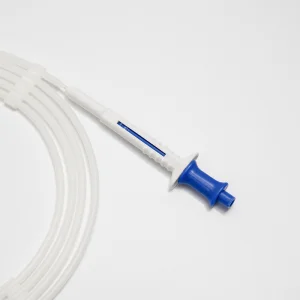
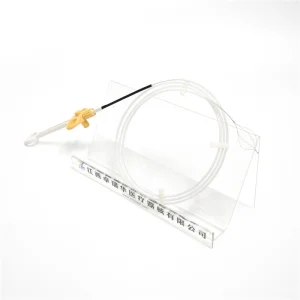
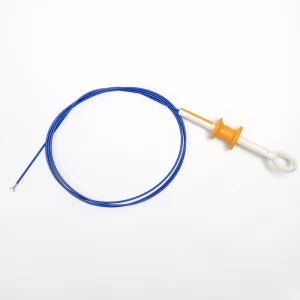
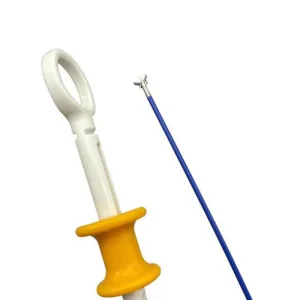
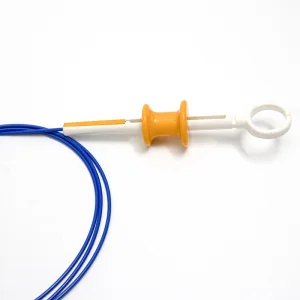
High-Quality Medical Gastric Endoscope Biopsy Specimen Forceps for Colonoscopy

High-Quality Medical Gastric Endoscope Biopsy Specimen Forceps for Colonoscopy Suppliers, Factory

Source Technical Specs
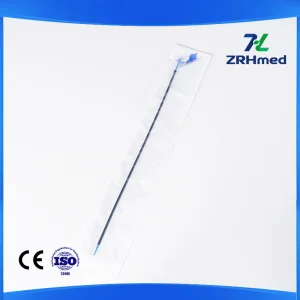
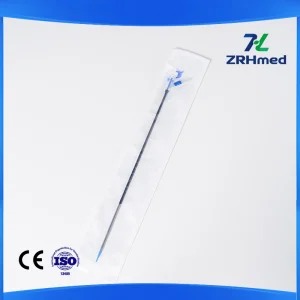
CE Certification Endoscopic Consumables Injectors Endoscopic Needle for Single Use

CE Certification Endoscopic Consumables Injectors Endoscopic Needle for Single Use Manufacturers, Factories

Source Technical Specs
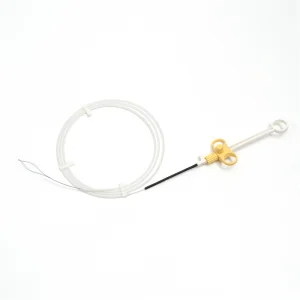
CE Certification Endoscopic Consumables Rotatable Stone Retrieval Basket

CE Certification Endoscopic Consumables Rotatable Stone Retrieval Basket for Stone Remove Manufacturer, Supplier

Source Technical Specs
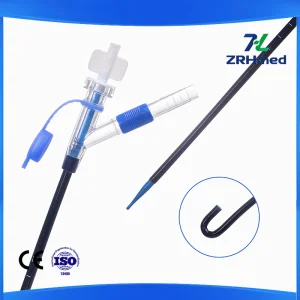
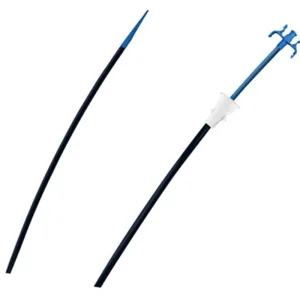
CE Approved Disposable Suction Ureteral Access Sheath Negative Pressure System

CE Certification CE Approved Disposable Suction Ureteral Access Sheath Negative Pressure System for RIRS & Kidney Stone Removal Manufacturer, Suppliers

Source Technical Specs
OEM Gastroscope Accessories Diamond Shaped Stone Extraction Basket for ERCP

OEM Gastroscope Accessories Diamond Shaped Stone Extraction Basket for Ercp Supplier, Suppliers

Source Technical Specs
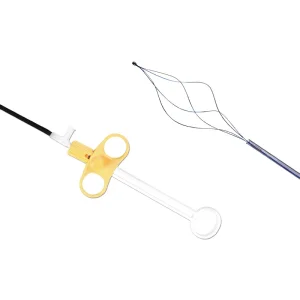
CE Certification ERCP Instrument Gallstone Stone Retrieval Basket

CE Certification ERCP Instrument Gallstone Stone Retrieval Basket for Endoscopy Supplier, Factory

Source Technical Specs
Industry Economics & Macro Dynamics

The Global Endoclip Market: Industrial Metamorphosis & Commercial Scalability

Strategic analysis of macroeconomic drivers, shifting regulatory boundaries under EU MDR, and the rapid migration toward vertically integrated OEM/ODM manufacturing ecosystems.

Clinical Reality & Procurement Paradigm: Endoscopic hemoclips represent the frontline mechanical intervention for non-variceal upper gastrointestinal bleeding (NVUGIB), post-polypectomy hemostasis, and mucosal defect approximation. As international healthcare systems intensify their scrutiny on nosocomial cross-contamination, the market has executed a total transition away from legacy reusable clip delivery systems toward pre-loaded, single-use, sterile rotatable endoclips.

Cost Rationalization & Tender Pressure

Global DRG (Diagnosis-Related Group) reimbursements and public tender frameworks demand aggressive bill-of-materials (BOM) cost compression without compromising tensile clamping reliability.

  • Shift toward high-capacity Chinese contract foundries
  • Elimination of multi-tiered OEM distribution margins
  • Standardized batch sizing for continuous procurement

Regulatory Barriers & MDR Intensification

The transition from MDD to EU MDR 2017/745 (Class IIb classification for long-term surgically invasive mucosal clips) has created supply chain bottlenecks for sub-tier manufacturers.

  • ISO 10993 cytotoxicity and biological evaluation rigors
  • Validation of shelf-life accelerated aging (ASTM F1980)
  • Comprehensive Clinical Evaluation Reports (CER)

Procedural Complexity & EMR/ESD Expansion

Therapeutic endoscopy is moving deeper into the submucosal space. Clip demand is expanding exponentially beyond simple arterial tamponade into complex wound closure and traction-assisted dissection.

  • Large-span (16mm+) clips for ESD defect closure
  • Repositionable jaws to avoid premature misfiring
  • Reduced post-deployment retained stem height
7.8%
Global Endoclip Market CAGR (2024–2032)
>18 N
Mean Clamping Retention Force
100%
Rotational Fidelity (1:1 Synchronous)
Class 100k
Cleanroom Manufacturing Environment
Micro-Mechanics & Metallurgy

Engineering Anatomy of Next-Generation Endoscopic Hemoclips

Deconstructing the micro-mechanical interface: wire rope torque transfer, jaw cam locking geometries, bi-directional tactile feedback, and superelastic alloy optimization.

1. Torque Transmission Drive Cable

The catheter core incorporates a multi-filar braided stainless steel (AISI 304V) wire structure wrapped in an ultra-low-friction PTFE outer sheath. This configuration guarantees exceptional column strength for pushing through tortuous anatomy (e.g., retroflexed fundus or splenic flexure) while maintaining seamless, lag-free 1:1 torque responsiveness without whipping.

2. Reversible Dual-Cam Jaw Kinematics

Unlike early irreversible ratchets, contemporary OEM designs implement micro-machined dual-linkage cam tracks. This enables gastroenterologists to open, re-position, close, and re-open the jaws up to 10+ cycles prior to irreversible release. The result is total precision in target lesion capture and zero wasted clips due to respiratory motion artifacts.

3. Controlled Tactile Release Breakaway

The lock-and-release mechanism utilizes a precision-notched shear pin calibrated to fracture cleanly at a defined tactile release threshold (typically 20N to 32N of proximal handle pulling force). This guarantees clear tactile feedback in the operator’s hand, confirming structural detachment while preventing accidental mucosal avulsion.

4. Low-Profile Retained Anchor Housing

A persistent risk in mucosal clipping is interference with subsequent therapeutic passes or scope maneuvers. Advanced OEM foundries mill the permanent anchor housing down to an ultra-short footprint (<5.5mm post-fire stem length), minimizing luminal obstruction and speeding natural mucosal sloughing after vascular remodeling.

Procedural Pathology & Techniques

Clinical Applications & Localized Endosurgical Scenarios

Evidence-based implementation protocols across Upper GI emergencies, elective colorectal oncological resections, and transluminal perforation salvage.

Acute Peptic Ulcer Hemorrhage (Forrest Ia / Ib / IIa)

Direct mechanical vessel apposition. When confronting a pulsating spurter or visible non-bleeding vessel in the duodenal bulb, thermal coaptation can cause transmural thermal injury. Rotatable clips anchor deep into the muscularis propria across the vessel axis, achieving instant hemostasis without risk of perforation.

Prophylactic Colonic Defect Closure (Post-EMR / ESD)

Post-polypectomy coagulation syndrome and delayed bleeding occur in up to 8% of large (>20mm) right-sided colonic lesions. Complete mucosal approximation ("zipper" technique) using 11mm to 16mm span clips isolates denuded submucosal vessels from acidic chyme and digestive enzymes, cutting readmissions by >75%.

Iatrogenic Luminal Perforation Emergency Rescue

Immediate mechanical closure of full-thickness barotrauma or electrosurgical cuts during complex endoscopic submucosal dissection. Dual-clip traction or endoloop-assisted purse-string suturing constructs an airtight serosa-to-serosa seal, converting what was once an emergent open laparotomy into an outpatient recovery pathway.

Benchmarking & Specifications

OEM Architectural Matrix: Dimensional & Mechanical Criteria

Direct comparison of critical performance tolerances across standard diagnostic, wide-opening therapeutic, and ultra-long access platforms.

Clip Specification Category Standard Gastro (Upper GI) Colono Therapeutic (Lower GI) Macro ESD Defect Closure Pediatric / Enteroscopy Access
Jaw Opening Width 9 mm – 11 mm 11 mm – 13 mm 15 mm – 17 mm 8 mm – 10 mm
Catheter Working Length 1650 mm – 1950 mm 2300 mm 1950 mm – 2300 mm 2600 mm – 3000 mm
Working Channel Min. Inner Ø 2.8 mm 2.8 mm / 3.2 mm 2.8 mm / 3.7 mm 2.0 mm / 2.2 mm
Torque Synchronization Rate 1:1 (360° Continuous) 1:1 (360° Continuous) 1:1 (360° Continuous) 0.85:1 (Optimized for Flex)
Open / Close Cycle Threshold ≥ 10 Cycles Pre-Fire ≥ 10 Cycles Pre-Fire ≥ 15 Cycles Pre-Fire ≥ 8 Cycles Pre-Fire
Shear Pin Breakaway Force 24 N ± 3 N 26 N ± 3 N 28 N ± 4 N 20 N ± 3 N
MRI Safety Environment MR Conditional (3.0 Tesla) MR Conditional (3.0 Tesla) MR Conditional (3.0 Tesla) MR Conditional (3.0 Tesla)
Primary Alloy Composition Medical 304V / 17-7PH Medical 304V / 316LVM High-Elastic Nitinol Arm Base Ultra-Hard Medical Austenitic
Contract Manufacturing Standards

Cleanroom Protocols, Traceability, and Private-Label Engineering

How top-tier medical device factories maintain defect parts-per-million (PPM) thresholds under rigorous audit surveillance.

Precision Laser Micromachining

Every jaw tooth, cam curvature, and retention hook is fabricated using femtosecond and fiber laser micro-cutting platforms. This eliminates microscopic micro-burrs and localized heat-affected zones (HAZ) that could otherwise trigger unexpected intra-procedural component fatigue or vessel shearing.

ISO Class 7 / Class 8 Cleanroom Assembly

Assembly takes place in high-efficiency particulate air (HEPA)-filtered clean environments adhering strictly to ISO 14644-1. Automated micro-crimping machines join cable terminals with optical vision verification, ensuring zero human error in tensile joint crimp integrity.

Sterilization & Bioburden Validation

Ethylene Oxide (EO) sterilization processes validated according to ISO 11135 ensure a minimum Sterility Assurance Level (SAL) of 10⁻⁶. Residual EO and ECH levels are analyzed via gas chromatography to remain far below ISO 10993-7 thresholds, preventing mucosal contact irritation.

Next-Gen Roadmap 2025–2035

The Future of Endoscopic Hemostasis: Bioabsorption & Intelligent Robotics

Pioneering advancements redefining mechanical mucosal apposition over the next decade.

Bioresorbable Magnesium & Polymer Alloys

Current permanent metallic clips remain attached to mucosal tissue for weeks to months, posing theoretical risks during follow-up imaging or procedures. Next-generation OEM designs incorporate bioresorbable magnesium alloys and tyrosine-derived polycarbonates engineered to degrade safely after 6 to 8 weeks, precisely matching the vascular tissue remodeling window.

Smart Sensor Integrated Clipping

Integration of micro-strain gauges and bio-impedance sensors inside the clip jaws provides operators real-time feedback on tissue perfusion, verifying complete microvascular occlusion without mucosal strangulation or tissue necrosis.

Robotic Compatibility & Magnetic Traction

As robotic-assisted flexible endoscopy systems enter clinical rotations, endoclips are engineered with ferromagnetic collars and micro-tethers to enable multi-vector robotic tissue retraction during complex transluminal surgery.

Therapeutic & Endourology Suite

Advanced Hemostasis, ERCP & Access Systems: Phase 02 Lineup

Direct supply options for specialized clinical channels: one-click release hemoclips, non-conductive snares, biliary stone extractors, and negative-pressure ureteral sheaths.
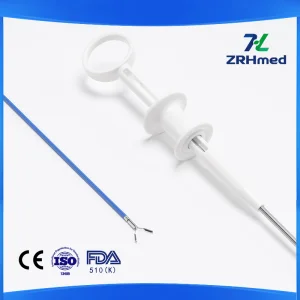
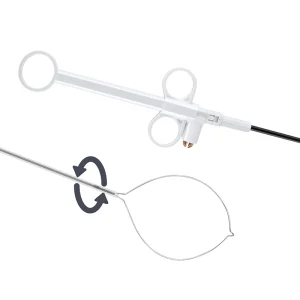
Disposable Endoscopic Resection Polypectomy Snare for Gastroenterology

High-Quality Disposable Endoscopic Resection Polypectomy Snare for Gastroenterology Manufacturers, Factory

Source Technical Specs
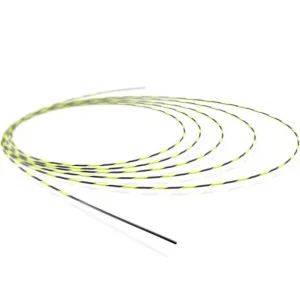
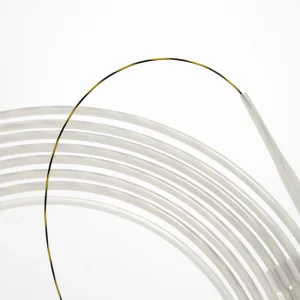
Gastrointestinal Endoscopic PTFE Coated ERCP Hydrophilic Guidewire

CE Certification Gastrointestinal Endoscopic PTFE Coated ERCP Hydrophilic Guidewire Manufacturer, Factories

Source Technical Specs
Disposable Percutaneous Nephrostomy Sheath Ureteral Access Sheath

CE Certification Disposable Percutaneous Nephrostomy Sheath Ureteral Access Sheath Urology Endoscopy Sheath Manufacturer, Factories

Source Technical Specs
ODM Disposable Super Smooth Endoscopic ERCP For GI Tract

ODM Disposable Super Smooth Endoscopic ERCP For Gastrointestinal Tract Gi Tract Manufacturers, Supplier

Source Technical Specs
ODM Dusting and Suction Ureteral Sheath Disposable Vacuum Assisted

ODM Dusting and Suction Ureteral Sheath Disposable Vacuum Assisted Access Sheath for Urolithiasis Treatment Manufacturer, Supplier

Source Technical Specs
CE Certification Single Use Ureteral Access Sheath with Integrated Suction

CE Certification Single Use Ureteral Access Sheath with Integrated Suction for Urology Supplier, Factory

Source Technical Specs
Technical & Regulatory Q&A

Clinical & Procurement FAQ for OEM Endoclip Buyers

In-depth responses covering mechanical tolerances, regulatory dossiers, torque fidelity, and cleanroom qualification.

How do rotatable endoclips achieve true 1:1 synchronous torque transmission without catheter whip?
Synchronous 360-degree rotation is engineered by using an internal torque wire rope constructed of cross-wound 304V medical-grade stainless steel filaments. This composite internal core is enclosed within a fluoropolymer (PTFE) low-friction liner and an outer high-durometer polymer extrusion. This multi-layered structure prevents energy storage during angular twisting, ensuring smooth 1:1 mechanical response at the distal jaw even when navigated through extreme acute bends in the retroflexed gastroscope.
What is the mechanical difference between single-action and repositionable endoclips?
Single-action clips utilize an irreversible ratchet design that locks permanently once pulled into the distal housing, meaning an imperfect grasp requires emergency cutting or accidental tissue injury. Repositionable clips feature a dual-linkage cam track that allows the operator to repeatedly expand, grasp, inspect, and re-open the jaw arms multiple times (≥10 cycles) without fatigue. Mechanical lock-and-fire occurs only when the operator intentionally pulls through the calibrated shear resistance threshold at the proximal control handle.
What technical documentation is mandatory for OEM private-label import into EU MDR markets?
Under EU MDR 2017/745, single-use endoclips are classified as Class IIb surgically invasive devices for long-term mucosal implantation (>30 days). OEM technical dossiers must encompass: (1) Full ISO 10993 biocompatibility testing including cytotoxicity, sensitization, irritation, systemic toxicity, and subchronic implantation studies; (2) Mechanical fatigue and clamping force validation data; (3) Accelerated and real-time package integrity and sterility aging reports (ASTM F1980); (4) Comprehensive Clinical Evaluation Report (CER) verified by Notified Bodies; and (5) UDI-DI system assignment compliant with EUDAMED database architecture.
Why is post-deployment retained stub length a crucial engineering benchmark?
After deployment, the retained anchor clip remains in the gastrointestinal lumen until epithelialization sloughs it off. If the remaining post-fire metallic stub is excessively tall (>7mm), it can catch the tip of the endoscope on subsequent retroflexion passes, scratch adjacent mucosal folds during peristalsis, or collide with subsequent hemoclips during dense zipper-closure of large ESD resection margins. Advanced OEM manufacturing centers utilize ultra-compact clip housings (≤5.2mm height), creating a flush mucosal profile.
What quality testing regimes are executed on each production lot during factory release?
OEM factory batch release involves three non-negotiable verification gates: (1) Dimensional inspection via non-contact optical video measurement machines (VMM) assessing jaw span, outer catheter diameter, and tip clearance; (2) Quantitative mechanical load testing measuring minimum clamping retention (>18 N), cyclic opening-closing fatigue resistance, and handle firing breakaway pull-force; and (3) Catheter torque stability and pushability testing through anatomical tortuosity fixtures mimicking the human duodenal C-loop.