Factory-direct OEM/ODM single-use portfolio designed with 1:1 tactile transmission, channel-safe lubricity, and verified cleanroom sterility for global hospital supply chains.
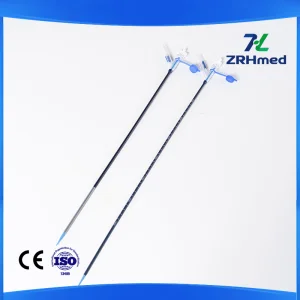
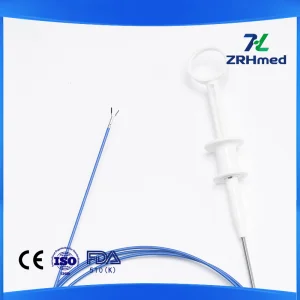
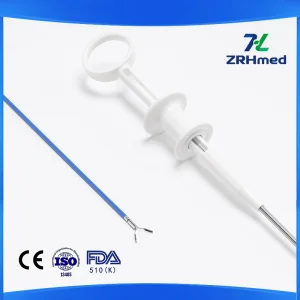
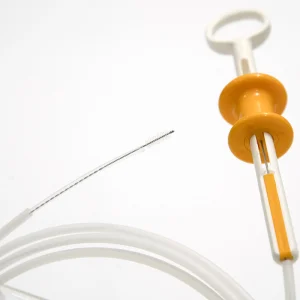
The global medical endoscopy consumables landscape is undergoing an unprecedented structural transition. Clinicians, hospital procurement groups, and regulatory bodies worldwide are accelerating the replacement of reusable endoscopic instruments with sterile, single-use alternatives. Driven by nosocomial infection risks, rising labor costs associated with scope reprocessing, and stringent regulatory demands (including EU MDR and US FDA guidelines), the contract manufacturing of gastrointestinal (GI) and endourological accessories has shifted from simple mechanical replication to micro-precision, high-biocompatibility engineering.
Historically, the reprocessing of multi-use accessories—such as mechanical biopsy forceps, endoscopic retrograde cholangiopancreatography (ERCP) sphincterotomes, and cytology brushes—posed persistent microbiological challenges. Complex mechanical hinges, miniature coiled springs, and internal lumina frequently retained bioburden despite enzymatic bath cycles and autoclave protocols. With cross-contamination events linked to drug-resistant pathogens (such as Carbapenem-Resistant Enterobacteriaceae), health authorities have tightened infection-control mandates. Consequently, single-use endoscopic consumables have evolved from an economic compromise into an imperative clinical safeguard.
For multinational distributors, private labelers, and tier-one medical brands, securing an OEM manufacturing partner capable of delivering consistent mechanical fidelity is vital. OEM factories must move beyond basic metal stamping: today's market demands full backward integration—from high-tensile 304V stainless steel coiled catheter extrusion and superelastic Nitinol laser-micromachining to robotic assembly in ISO Class 7/8 cleanrooms. As procedure volumes expand within Ambulatory Surgical Centers (ASCs), factory agility, validated low-particulate packaging, and complete Device Master Record (DMR) transferability determine long-term commercial competitiveness.
Navigating global tender requirements, hospital margin pressures, and regulatory harmonizations demands a rigorous vendor qualification protocol.
Hospital purchasing groups (GPOs) and public tenders demand aggressive cost-per-procedure reductions without compromising clinical safety. Direct-from-factory OEM arrangements bypass tier-two markups, providing distributors with 35%–55% margin buffers necessary to win competitive institutional tenders.
Regulatory approval cycles can delay product launches by 12 to 24 months if technical documentation lacks depth. World-class OEM manufacturers supply comprehensive Design History Files (DHF), biocompatibility matrices (ISO 10993), and sterilization validation studies (ISO 11135) mapped directly to local regulatory frameworks.
Endoscopy accessories must navigate tortuous anatomies inside acute retroflexed gastroscopes or colonoscopes without binding, kinking, or scratching the instrument channel lining. Procurement teams rigorously evaluate axial pushability, rotational 1:1 torque transmission, and jaw/snare deployment forces under tortuous path conditions.
Endoscopy consumables cannot be built as isolated SKUs. Leading OEM factories engineer interconnected suites optimized for specific interventional therapeutic pathways.
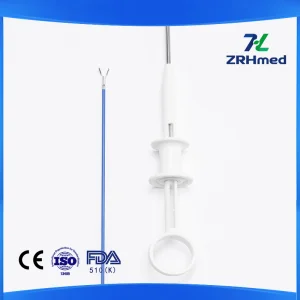
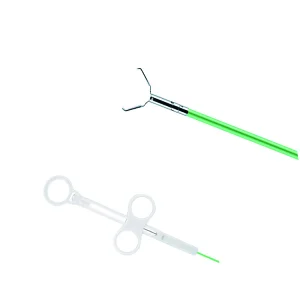
Engineered for rapid mechanical ligation of peptic ulcer hemorrhages, Dieulafoy's lesions, and post-polypectomy mucosal perforations. Features repeatable opening/closing mechanisms and 360-degree rotation.
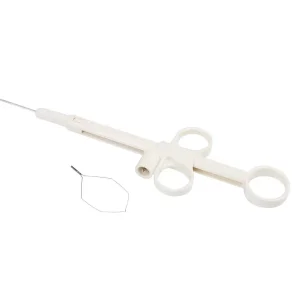
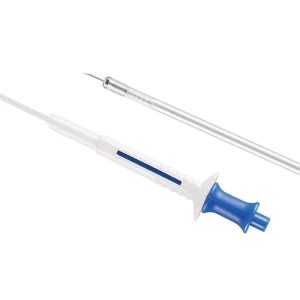
For mucosal and submucosal lesion lifts, precise resections, and tissue harvesting. Integrates anti-coring micro-injection needles with ultra-fine braided nitinol cold/hot snares for uniform resection margins.
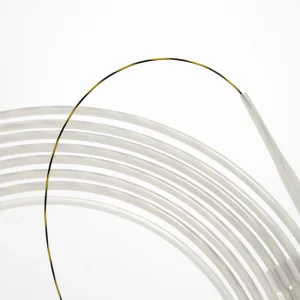
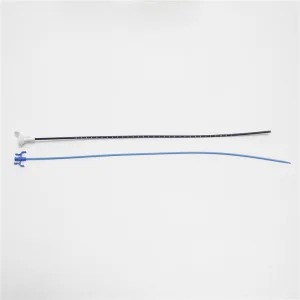
Overcoming difficult cannulation in biliary anatomy. Features multi-lumen radiopaque sphincterotomes, flexible braided extraction baskets, and high-lubricity hydrophilic guidewires for rapid cannulation.
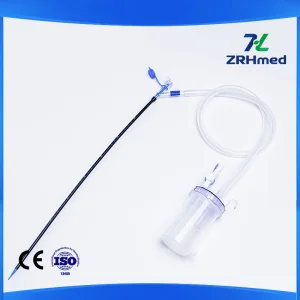
Advanced ureteroscopic access systems engineered with active negative pressure aspiration to control intrapelvic pressure (IPP) and eliminate aerosolized stone dust during holmium/thulium lithotripsy.
Delivering high-yield diagnostic samples with minimal mucosal tearing. Micro-welded articulated biopsy forceps and bronchial cytology brushes engineered for precise histology in difficult-to-reach lesions.
Ensuring patient airway protection, endoscope channel longevity, and validated decontamination. Includes ergonomic disposable bite blocks with oxygen ports and specialized micro-bristle cleaning tools.
Every production lot manufactured in our factory adheres to rigorous international standards, ensuring seamless hospital importation and audit readiness worldwide.
Our Jiangxi production center operates under three distinct QC gates: Incoming Material Verification (spectrometry alloy verification, tensile testing of raw nitinol/PEEK wires), In-Process Quality Control (laser-guided dimensional measurement, crimp strength testing, joint torque tests), and 100% Final Lot Release Inspection (leak tests, deployment smoothness, pouch seal integrity under ASTM F88).
Every individual sterile carton and master shipper carries a Unique Device Identification (UDI) compliant DataMatrix barcode, providing end-to-end traceability from raw wire heat-numbers to the clinical operating room.
We empower regional medical distributors to establish defensible brand equity. OEM services include bespoke Tyvek® blister pouch printing, multi-language Instructions for Use (IFU) translated in accordance with local national regulations, regional barcoding (GS1, HIBC), and custom sterile secondary packaging configured for regional automated hospital stocking carousels.
Our regulatory affairs team provides direct technical dossiers and certificates of analysis (CoA) per SKU, assisting partner submissions to ANVISA (Brazil), PMDA (Japan), TGA (Australia), and MoH health authorities across Southeast Asia and the Middle East.
Anticipating the next decade of minimally invasive surgery through continuous material science innovations, active feedback integration, and reduced environmental footprints.
Replacing traditional wire-forming with ultra-cold femtosecond laser ablation. Delivers defect-free microscopic geometries, seamless multi-stage latching teeth on hemoclips, and ultra-flexible stone baskets with zero heat-affected zones (HAZ).
Advanced cross-linked polymer coatings that reduce coefficient of friction to below 0.015. Resists electrosurgical tissue adherence during hot snare polypectomy and reduces blood clot attachment on long-dwelling endoscopic sheaths.
Co-development of negative pressure ureteral access sheaths with fiber-optic pressure micro-transducers. Provides real-time audible and visual alarms to the surgical team whenever intrapelvic pressure reaches threshold levels.
Pioneering the migration to bio-derived polymers for non-patient contacting handles and recyclable single-polymer blister packaging. Reduces clinical medical waste volumes without compromising barrier sterile integrity.
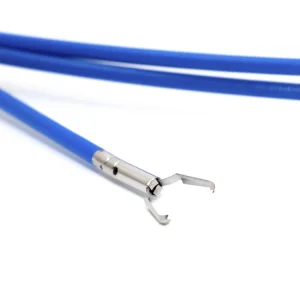
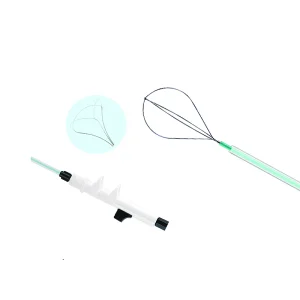
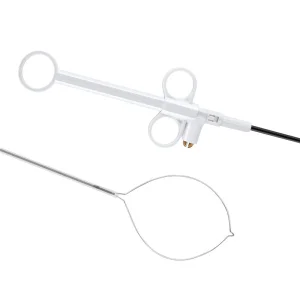
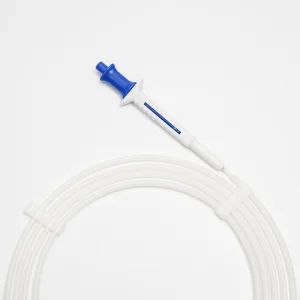
Secondary portfolio highlight featuring advanced lithotripsy suction sheaths, superelastic nitinol stone extractors, repeatable clipping mechanisms, and sclerotherapy injection instruments.
Addressing operational, regulatory, and mechanical questions typically raised by medical distributor engineering teams and supply chain executives.
Whether you require turn-key contract manufacturing, rapid OEM line extensions in ERCP/Urology, or tender-winning private-label GI consumables, our technical engineering team is ready to review your specification drawings.