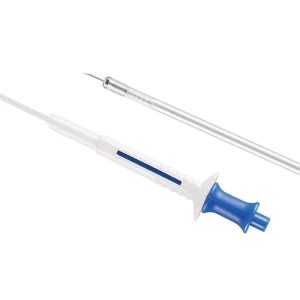
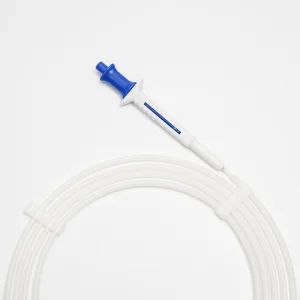
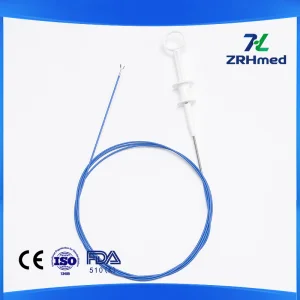
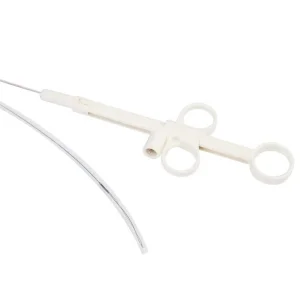
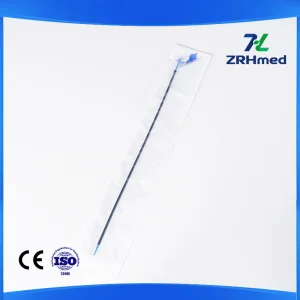
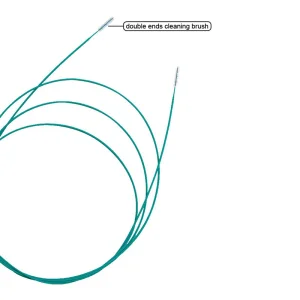
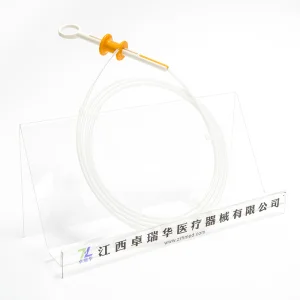
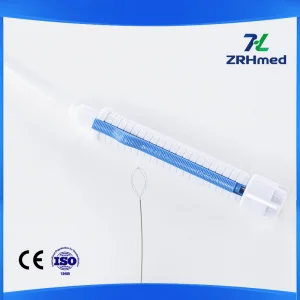
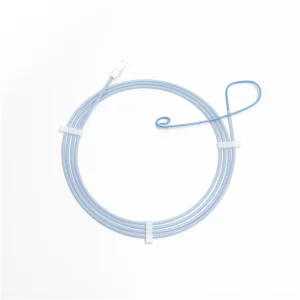
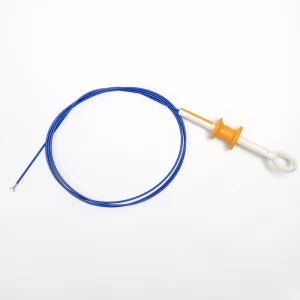
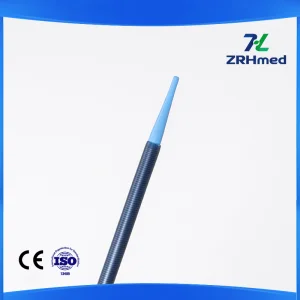
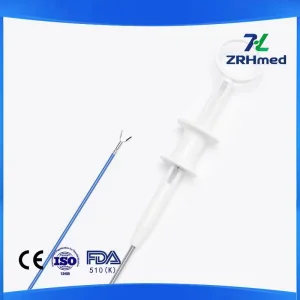
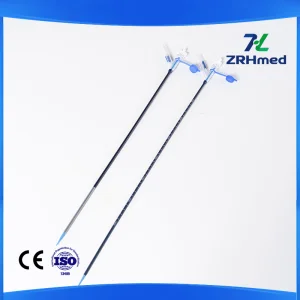
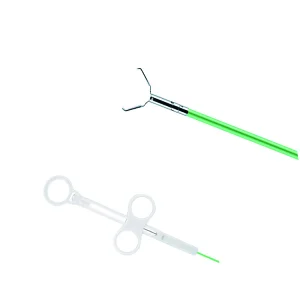
Engineered for seamless working channel compatibility, tactile deployment feedback, and puncture integrity in high-tortuosity diagnostic and interventional endoscopy.
In modern therapeutic gastroenterology, sclerotherapy needles represent the foundational class II interventional device for mucosal elevation, endoscopic mucosal resection (EMR), endoscopic submucosal dissection (ESD), and acute non-variceal upper gastrointestinal hemorrhage control.
Endoscopic injection needles must deliver viscous solutions (e.g., sodium hyaluronate, glycerol, diluted epinephrine) through ultra-thin lumens (21G to 25G) spanning up to 2300mm in working length without excessive backpressure or flow resistance, requiring specialized internal PTFE/FEP composite liners.
Navigating tortuous gastrointestinal anatomy requires exceptional column strength. Our factory integrates braided stainless-steel outer jackets and kink-resistant fluoropolymer inner conduits, ensuring smooth retraction and full stroke deployment even in sharply flexed duodenoscopes.
The lancet or tri-bevel tip geometry is laser-machined from medical-grade AISI 304/316L stainless steel, allowing sharp puncture with minimal penetration force, drastically reducing muscularis propria perforation risks while maintaining seal around the injection site.
Medical device brand owners, hospital procurement consortiums, and specialized B2B importers face distinct operational challenges when securing consistent sclerotherapy needle supplies.
Distributors require single-source manufacturing that accommodates working lengths from 1600mm to 2300mm and needle diameters from 21G to 25G, matching pediatric gastroscopes up to adult colonoscopes.
Surgeons demand single-hand operation with definitive acoustic/tactile click locks indicating full needle extension and retraction, preventing accidental scope channel perforation during withdrawal.
Tender pricing pressure from national health authorities necessitates highly competitive factory-gate costs without sacrificing cleanroom compliance or bioburden safety certifications.
Validated Ethylene Oxide (EO) sterilization cycles per ISO 11135, backed by low residual testing reports and 3-to-5-year sterile barrier packaging shelf life stability validations.
Engineered to interface natively with Olympus, Pentax, Fujifilm, and contemporary HD video endoscopy platforms globally.
| Needle Gauge (G) | Outer Diameter (OD) | Needle Protrusion Length | Sheath Diameter | Working Length | Primary Clinical Application |
|---|---|---|---|---|---|
| 21 Gauge | 0.80 mm ± 0.01 | 4.0 mm / 5.0 mm / 6.0 mm | 2.3 mm / 2.5 mm | 1600 mm – 2300 mm | High-viscosity submucosal lifting agent delivery, large-volume bolus |
| 22 Gauge | 0.70 mm ± 0.01 | 4.0 mm / 5.0 mm | 2.3 mm | 1600 mm – 2300 mm | Standard EMR/ESD saline injection, acute variceal bleeding control |
| 23 Gauge | 0.60 mm ± 0.01 | 4.0 mm / 5.0 mm | 1.8 mm / 2.3 mm | 1800 mm – 2300 mm | Routine mucosal lift, pediatric gastrointestinal sclerotherapy |
| 25 Gauge | 0.50 mm ± 0.01 | 3.0 mm / 4.0 mm | 1.8 mm | 1200 mm – 1800 mm | Precision targeted vascular injection, minimal trauma procedures |
From cleanroom extrusion to custom packaging design, our integrated industrial facility in Jiangxi operates as a high-throughput manufacturing engine for global endoscopy brands.
Rapid mold fabrication, custom laser welding setups, and proprietary needle bevelling configurations allowing rapid transition from design freeze to pilot runs within 4 to 6 weeks.
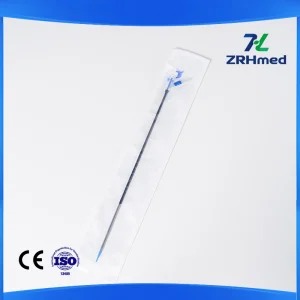
Turnkey packaging solutions including Tyvek blister sealing, multilingual label printing (GS1-128 barcode / UDI compliant), carton designing, and validated terminal Ethylene Oxide sterilization.
Multi-tier quality inspections encompassing automated needle straightness verification, tensile joint pulling tests (≥20N), fluid leak testing up to 300 kPa, and particle contamination checks.
Continuous investment in micro-electromechanical engineering, smart coatings, and echo-enhanced visualization for next-generation endotherapy devices.
Current generation deployments feature nano-coatings within the inner catheter lumen to lower coefficient of friction by 40%, enabling zero-fatigue high-viscosity hydrogel injection during prolonged ESD procedures.
Laser surface texturing on the distal needle point creates ultrasound reflection dimples, providing crisp ultrasound visibility under Endoscopic Ultrasound (EUS) guidance for targeted peri-tumoral injections.
R&D prototyping of distal tissue-impedance feedback needles to provide acoustic signals upon entering the true submucosal space, actively safeguarding against inadvertent muscularis or serosal penetration.
Ensuring frictionless international market access through pre-cleared technical documentation, robust QMS certifications, and comprehensive testing protocols.
Comprehensive technical files compiled to meet EU Medical Device Regulation (MDR 2017/745) requirements, supporting direct CE-mark transfers for authorized distributors.
Certified manufacturing site audited annually by global notified bodies, ensuring every production batch satisfies cleanroom microbiological and particle load mandates.
Complete panel biocompatibility testing reports ready for local ministry filings, including cytotoxicity, systemic toxicity, sensitization, irritation, and hemocompatibility profiles.
Full support for registration filings with ANVISA (Brazil), FDA 510(k) pathway (USA), COFEPRIS (Mexico), MFDS (South Korea), and NMPA (China) with dedicated dossier support teams.
Key technical, regulatory, and supply chain considerations for medical device distribution partners and hospital buyers.
Complementary single-use therapeutic instruments manufactured to rigorous cleanroom tolerances for endosurgical, biliary, and endourological interventions.