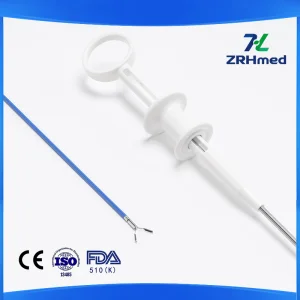
ODM Endoscopic Hemoclip – Reliable GI Hemostasis & Wound Closure for Azerbaijan Clinics
Explore Specifications
Engineered to international regulatory benchmarks, these primary sterile therapeutic consumables form the backbone of modern gastroenterology and minimally invasive surgical suites in Azerbaijan.
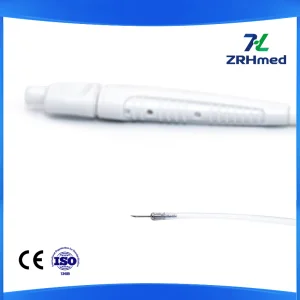
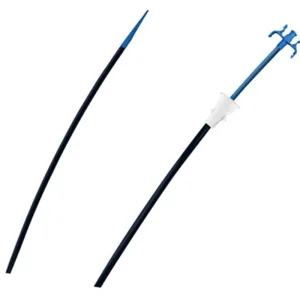
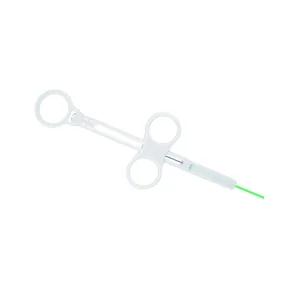
Azerbaijan's healthcare landscape is experiencing a profound transition driven by the nationwide rollout of Compulsory Health Insurance (İcbari Tibbi Sığorta) supervised by the State Agency for Mandatory Health Insurance and managed clinically under TƏBİB (Management Union of Medical Territorial Units). This systemic overhaul has elevated demand for therapeutic Endoscopic Retrograde Cholangiopancreatography (ERCP) procedures across major hospital networks in Baku, Sumqayit, Ganja, and Lankaran.
Clinically, biliary tract pathologies—specifically choledocholithiasis, benign biliary strictures, and malignant periampullary obstructions—demonstrate high regional prevalence in the South Caucasus. Historic reliances on open surgical common bile duct explorations are being systematically phased out in favor of fluoroscopically guided sphincterotomy and papillary balloon dilation. Leading clinical centers such as the Republican Clinical Hospital named after Academician Mirgasimov, the Scientific Surgery Center named after M. Topchubashov, and private tertiary institutions like Bona Dea International Hospital and Central Clinical Hospital in Baku require disposable, sterile sphincterotomes to minimize cross-contamination hazards (notably carbapenem-resistant Enterobacteriaceae and viral hepatitis) associated with multi-use instruments.
Consequently, local medical procurement directors face escalating pressure to maintain cost containment without compromising on micro-instrument performance, cutting vector accuracy, and strict conformity to European Union CE regulatory requirements (Regulation EU 2017/745 MDR / Directive 93/42/EEC).
A comprehensive engineering review of multi-lumen extrusion, cutting-wire vector mechanics, and electrosurgical safety profiles essential for high-success cannulation at the Papilla of Vater.
Fabricated using biocompatible medical-grade Pebax and fluoropolymer compounds, our three-lumen extrusion isolates functional pathways to eliminate procedural cross-talk:
Orientation of the incision line is critical for mitigating post-ERCP pancreatitis and preventing retroperitoneal perforation. Our mechanical handle design ensures:
Designed for universal compatibility with hospital high-frequency electrosurgical units (ESU) including Erbe VIO series, Olympus ESG, and Covidien generators:
| Parameter / Model Type | Standard Triple-Lumen | Rotatable Micro-Tip | Pre-Curved Pull-Type |
|---|---|---|---|
| Outer Catheter Diameter (Distal / Proximal) | 4.5 Fr / 6.0 Fr | 3.9 Fr / 5.5 Fr | 4.5 Fr / 6.0 Fr |
| Working Length (cm) | 2000 mm | 2000 mm | 1950 mm - 2100 mm |
| Cutting Wire Length (mm) | 20 mm / 25 mm / 30 mm | 15 mm / 20 mm | 20 mm / 25 mm |
| Tip Configuration | Short Tip (3mm) / Standard (5mm) | Ultra-tapered Dome Tip | Classic Pre-curved |
| Guidewire Compatibility (inch) | 0.035" (0.89 mm) | 0.025" / 0.035" | 0.035" (0.89 mm) |
| Sterilization & Shelf Life | Ethylene Oxide (EO) / 3 Years | Ethylene Oxide (EO) / 3 Years | Ethylene Oxide (EO) / 3 Years |
For medical distributors in Azerbaijan, relying on Western European consumables frequently creates bottlenecks: lengthy lead times (upwards of 16 to 24 weeks), excessive currency exchange surcharges, and volatile delivery schedules. Jiangxi ZhuoRuiHua Medical Instrument Co., Ltd. resolves these challenges by combining advanced smart factory infrastructure with optimized logistics pipelines tailored to the South Caucasus.
Operating within our ISO Class 8 (Class 100,000) cleanroom production suites, our manufacturing processes leverage automated laser-microwelding, vision-guided tip profiling, and continuous tension-testing rigs. Each batch of disposable sphincterotomes undergoes automated multi-axis electrical continuity validation, dielectric insulation testing, and lumen patency verification.
Strategically, shipments to Azerbaijan benefit directly from the Trans-Caspian International Transport Route (the "Middle Corridor"). With freight moving seamlessly via rail through Central Asia to the Port of Baku (Alat) or direct air cargo into Baku Heydar Aliyev International Airport (GYD), replenishment lead times are reduced to 7–14 days. Distributors can reliably supply TƏBİB tenders without holding cripplingly expensive safety stock.
Customization of catheter length, tip profile, packaging artwork, and Azerbaijani-language labeling (Azərbaycan dili markalanması) tailored to regional regulatory dossiers.
Complete DHR (Device History Record) tracking from raw resin feedstocks to final EO sterilization biological indicator clearance, adhering to ISO 11135 and ISO 13485.
Engineered for high procedural complexity, providing stable cannulation and precise papillotomy across diverse clinical indications.
In high-urgency emergency decompressions at Baku acute care trauma units, the pre-curved tip and smooth fluoropolymer shaft allow rapid selective common bile duct cannulation, followed by micro-controlled incision to establish biliary drainage within critical time windows.
Precise sphincterotomy of the Oddi sphincter creates an adequate papillary orifice for subsequent balloon or stone extraction basket passage, avoiding the risk of stone impaction or incomplete clearing of large calculus fragments in common bile duct lumens.
For patients with prior gastrectomies (Billroth II) or periampullary diverticula treated in specialized gastrointestinal surgical centers, rotatable sphincterotome variants offer multi-axis positioning to reorient the cutting wire safely away from pancreatic parenchymal tissues.
Critical commercial, regulatory, and technical considerations for importing single-use ERCP devices into the Republic of Azerbaijan.
Yes. Our devices carry full CE marking under European Medical Device regulations and comply with ISO 13485:2016 quality management standards. We provide complete technical documentation dossiers, Declarations of Conformity (DoC), biocompatibility reports (ISO 10993), and sterilization validation data (ISO 11135) required by the Analytical Expertise Center of the Ministry of Health of the Republic of Azerbaijan for medical product registration.
For urgent replenishment, scheduled air cargo via Baku Heydar Aliyev Airport (GYD) arrives within 5 to 8 business days. For bulk consolidated orders supporting annual hospital supply agreements, multimodal rail freight via the Trans-Caspian Corridor into Alat Port or Baku cargo terminals takes approximately 18 to 24 days, significantly lowering landed per-unit transport costs.
Yes. We offer end-to-end OEM and ODM services. We configure external carton packaging, Tyvek pouches, and instructions for use (IFU) with compliant Azerbaijani-language translations (Azərbaycan dili) along with barcode and GS1-standard 2D data-matrix tagging required for national health registry traceability.
Our sphincterotomes utilize standard medical-grade HF electrocautery pin connections compatible with Erbe (VIO 200/300/ICC series), Olympus (ESG-100, ESG-300), and Medtronic/Covidien Valleylab systems. We provide preset electrical cut/coag parameter guidance for gastrointestinal endoscopic applications.
To support distributor market entry and clinical product trial evaluation across Baku hospital departments, we offer flexible trial MOQs starting at 50 to 100 units for standard models. High-volume contract tiers are structured specifically to give bidding distributors strong price margins in TƏBİB centralized tenders.
Every single unit undergoes automated multi-point dielectric testing to confirm 100% integrity of the fluoropolymer insulation jacket. The active wire's proximal insulation prevents arc jump to the endoscope working channel, completely protecting both the patient tissue and expensive duodenoscope channels.
Direct manufacturer pricing, rapid delivery to Baku, and complete regulatory dossiers. Request a comprehensive product sample kit or tender quote sheet today.
Complete clinical supply lines manufactured under sterile cleanroom protocols to complement sphincterotomy procedures and extend endoscopic capabilities across regional healthcare institutions.