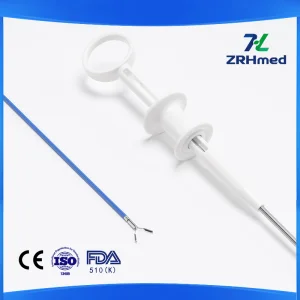
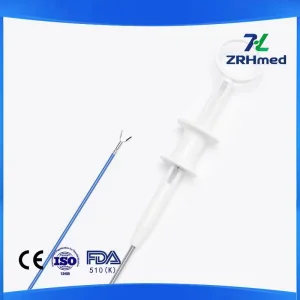
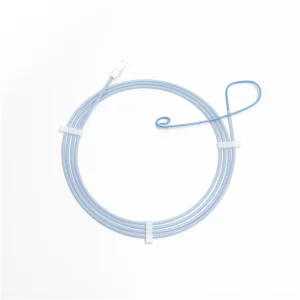
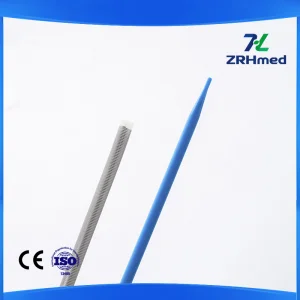
Direct-from-factory diagnostic and therapeutic consumables engineered for gastroenterology, interventional pulmonology, and urology departments worldwide.
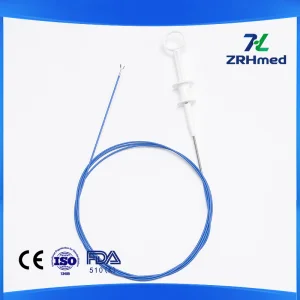
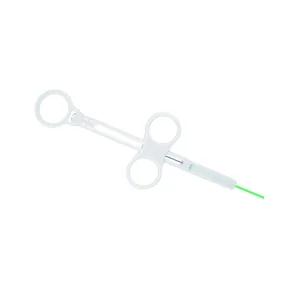
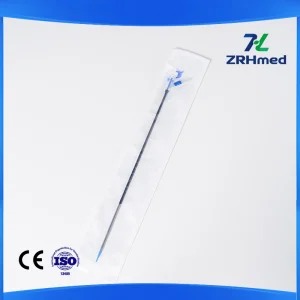
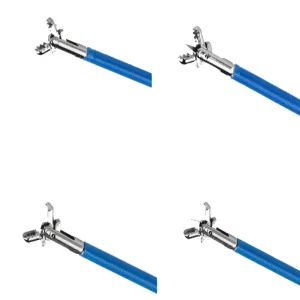
An authoritative engineering assessment of electrocautery-induced transmural necrosis versus mechanical shear planes in gastrointestinal polyp eradication.
Endoscopic polypectomy represents the frontline clinical intervention for mitigating colorectal cancer (CRC) mortality globally. Over the last decade, gastroenterological societies—including the European Society of Gastrointestinal Endoscopy (ESGE) and the American Society for Gastrointestinal Endoscopy (ASGE)—have redefined standard-of-care guidelines for dimunitive (≤5 mm) and small (6–9 mm) polyps. The historic reliance on Hot Snare Polypectomy (HSP), which pairs electrocautery with mechanical closure, is increasingly superseded by dedicated Cold Snare Polypectomy (CSP) techniques. This evolution directly shapes medical device procurement, demanding tighter mechanical tolerances and advanced wire metallurgy from qualified medical manufacturing partners.
The primary clinical drawback of hot resection for sub-centimeter lesions is delayed post-polypectomy bleeding (PPB) and deep thermal injury resulting in post-polypectomy electrocoagulation syndrome (PPCS) or micro-perforation. When high-frequency alternating current is conducted through the muscularis propria, thermal dissipation creates an eschar that sloughs off days later. In contrast, modern CSP creates a pure mechanical transection of the mucosa and submucosa, preserving deep vessel architecture intact and sparing the underlying muscular layers. However, pure mechanical transection requires specialized snare architectures: thin, high-tensile braided wire matrices that execute a clean guillotine shearing action rather than tissue slippage or tearing.
| Performance Metric | Cold Snare Polypectomy (CSP) Specification | Hot Snare Polypectomy (HSP) Specification | OEM Engineering Benchmark |
|---|---|---|---|
| Loop Wire Diameter | 0.24 mm – 0.30 mm (Ultra-fine micro-braid) | 0.40 mm – 0.48 mm (Standard gauge) | Laser micrometry ±0.005 mm tolerance |
| Cutting Mechanism | High-force mechanical guillotine shear | Ohmic heating + localized tissue vaporization | Zero-gap sheath closure calibration |
| Deep Thermal Necrosis | 0.0% (Zero radiofrequency application) | 1.2 mm – 2.8 mm lateral and depth dispersion | Complete thermal insulation sheath testing |
| Delayed Bleeding Risk | <0.5% in polyps ≤10 mm | 1.8% – 3.2% (Requiring secondary clip closure) | Validated clinical follow-up data (PMCF) |
| Radial Force & Grip | High radial spring rate for mucosal pinning | Moderate stiffness, relies on thermal snare weld | Nitinol or 304V tempered memory wire |
Pioneering advancements across shape-memory metallurgy, artificial intelligence synchronization, and multifunctional resection systems.
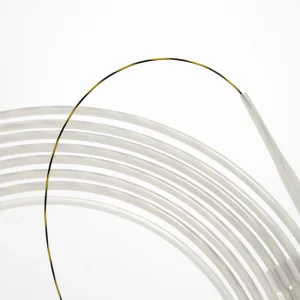
Traditional stainless-steel snares are vulnerable to loop deformation and plastic yielding after repeated deployments through tortuous endoscope configurations. Modern R&D has introduced custom heat-treated Nitinol (Nickel-Titanium) core alloys and multi-strand braided configurations.
With Computer-Aided Detection (CADe) and Diagnosis (CADx) platforms integrated into modern endoscopy towers, resection snares are evolving into smart procedural instruments matched directly to computational pathology readouts.
Reducing procedural exchange times is paramount in advanced Endoscopic Mucosal Resection (EMR). Emerging device architectures eliminate the need to alternate between submucosal injection needles and resection snares.
Balancing infection control, sterile barrier assurance, and per-case consumable expenditures in high-throughput endoscopy units.
Across high-income healthcare systems in North America, Western Europe, and Japan, as well as rapidly expanding private hospital networks across Latin America and the Asia-Pacific, Ambulatory Surgery Centers (ASCs) and outpatient endoscopy suites face an identical triad of pressures: increasing colonoscopy screening volumes, stringent cross-contamination mandates, and reimbursement compression. Single-use, factory-sterile polypectomy snares have resolved the catastrophic infection risks historically associated with complex, lumen-based reprocessing while unlocking substantial financial and operational efficiencies.
Multiple multi-society audits demonstrated that reprocessed flexible accessories harbor persistent microbiological bio-burden in inner coil springs and distal crimp joints. Single-use snares packaged in validated Tyvek® sterile barriers ensure absolute sterility (SAL 10⁻⁶), completely neutralizing hospital-acquired infection (HAI) liability.
In high-volume screening centers performing 30 to 50 colonoscopies daily, device setup time directly impacts procedure room turnover. Pre-sterilized, ready-to-deploy snares with ergonomic thumb-ring handles reduce nursing preparation overhead and eliminate device rejection rates due to mechanical fatigue.
Reprocessing capital costs—including ultrasonic washers, enzymatic chemical solutions, biological indicators, technician labor, and autoclave validation—frequently exceed €8 to €14 per cycle for reusable tools. Direct OEM supply agreements drive per-procedure consumable costs below these variable reprocessing expenditures.
From technical documentation architectures under EU MDR to ISO 13485:2016 quality systems, we insulate international distributors from regulatory exposure.
The enforcement of the European Union Medical Device Regulation (MDR EU 2017/745) has fundamentally transformed the medical device procurement landscape. The transition away from the Medical Devices Directive (MDD 93/42/EEC) has resulted in the elimination of thousands of legacy SKUs due to the stringent clinical evaluation, post-market surveillance (PMS), and Notified Body oversight now legally required. For hospital networks and regional medical distributors, partnering with a Chinese manufacturing powerhouse that holds verified MDR CE Certification is vital to ensuring unbroken supply chains and risk mitigation.
Our polypectomy snares and endoscopic consumables portfolio are backed by comprehensive, fully audited technical files ready for immediate verification:
Regulatory compliance does not terminate at device clearance. We provide end-to-end support for regional marketing authorization and tender dossiers worldwide:
Inside our advanced Jiangxi manufacturing complex: high-speed automated braiding, precision laser micro-welding, and Class 100,000 cleanroom environments.
Headquartered in Jiangxi, China, Jiangxi ZhuoRuiHua Medical Instrument Co., Ltd. (ZHR Med) epitomizes the transformation of modern Chinese medical technology manufacturing. Shifting completely away from labor-intensive manual assembly, our facility is engineered around digitalized Industry 4.0 protocols. By centralizing mold development, polymer extrusion, wire braiding, cleanroom assembly, and sterilization under one unified roof, we eliminate intermediate supply chain delays, guaranteeing flawless lot-to-lot consistency and massive economies of scale for our global partners.
Our loop formation infrastructure utilizes customized multi-axis CNC machines and automated laser-welding stations. Wire ends are fused with micro-joule precision, eliminating jagged flash or weld beads that could otherwise damage working channel liners or cause premature snare detachment during high-stress polyps resection.
All assembly, catheter threading, and blister packaging processes occur inside validated Class 10,000 (ISO Class 7) and Class 100,000 (ISO Class 8) cleanroom suites. Positive air pressurization, HEPA air filtration arrays, and strict gowning protocols maintain airborne particulate counts far below regulatory maximums.
Every single snare is tracked via our Manufacturing Execution System (MES). From raw wire spool tensile lot numbers to final ethylene oxide chamber cycle sensor graphs, each finished carton can be audited downstream to individual machine parameters, operator IDs, and component certificates of analysis (CoAs).
Tailoring dimensions, loop dynamics, handle ergonomics, and packaging configurations to match exact hospital tender requirements.
ZhuoRuiHua Medical operates as an established contract manufacturing and private-label partner for global medical device brands and top-tier distributors across 45+ countries. Whether you require standard catalogue SKUs for private tender bids or end-to-end custom device development, our internal tooling and engineering teams deliver rapid prototyping, comprehensive validation testing, and turnkey regulatory packaging.
Tailored loop profiles engineered for specific anatomical locations and polyp morphologies:
Engineered for flawless passage through standard biopsy channels:
Designed in collaboration with practicing gastroenterologists:
Turnkey brand integration and transit assurance:
In-depth technical answers addressing regulatory compliance, engineering limits, and enterprise supplier evaluation.
Using a traditional hot snare "cold" without electrocautery is clinically suboptimal and frequently leads to incomplete resection or tissue slippage. Conventional hot snares feature thicker braided wire (typically 0.40 mm to 0.48 mm) designed to conduct high-frequency RF current to vaporize tissue. When pulled cold, this blunt profile exerts crushing rather than shearing force, requiring excessive handle pressure and tearing the mucosal layer. In contrast, dedicated CSP instruments engineered by ZhuoRuiHua Medical utilize ultra-thin wire profiles (0.24 mm – 0.30 mm) crafted from high-tensile braided stainless steel or drawn Nitinol. This creates an acute cutting angle capable of executing a crisp, guillotine mechanical shear through the muscularis mucosae and submucosa, retrieving an intact histological specimen with clean horizontal and deep margins while preventing tears in deeper vascular beds.
Our entire manufacturing infrastructure and product technical documentation operate under an audited ISO 13485:2016 quality management system aligned directly with European Medical Device Regulation (MDR) standards. We work closely with leading European Notified Bodies to maintain full CE certification under Annex IX (Conformity Assessment based on a Quality Management System and an Assessment of the Technical Documentation). Every product line has passed extensive Class IIa/IIb biocompatibility evaluations (ISO 10993), packaging stability validations (ASTM F1980), and comprehensive Clinical Evaluation Reports (CER) compliant with MEDDEV 2.7/1 Rev. 4 and MDCG 2020-6 guidelines. All packaging features compliant UDI barcodes and references our registered European Authorized Representative (EC REP).
Every production batch undergoes destructive and non-destructive quality release testing. Tensile pull-off testing on calibrated digital force gauges evaluates the joint integrity between the braided snare loop, drive cable, and distal crimp collar, with our internal release specification requiring minimum yield strength exceeding 50 N (substantially higher than the ISO benchmark). Additionally, samples undergo 50 full deployment cycles through tortuous anatomical simulators configured to a 180-degree bend radius of 30 mm to verify that no loop warping, catheter kinking, or handle friction escalation occurs.
For standard ZRH Med catalogue items, standard lead times range from 15 to 25 business days depending on order volume, with buffer stock programs available for long-term contract partners. For custom OEM/ODM configurations (involving specialized loop geometries, custom shaft lengths, unique handle color-coding, or private-label packaging artwork), minimum order quantities typically begin at 1,000 to 3,000 units per SKU. Turnkey packaging services include complete primary Tyvek® blister pouch sealing, multilingual carton printing, user instruction leaflets (IFUs), and export master carton palletization.
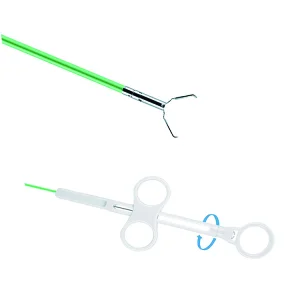
Rotational control is vital when approaching polyps positioned behind haustral folds or in difficult flexures. Our rotatable series utilizes a specialized multi-filar braided inner transmission cable paired with a low-friction fluoropolymer outer jacket. This configuration ensures that rotational torque applied at the ergonomic handle translates into immediate, 1:1 synchronized rotation at the distal loop tip without rotational hysteresis, whip, or sudden snap-through. Clinicians achieve effortless lesion alignment on the first pass, significantly reducing procedural duration.
Complete your hospital tender portfolios with our CE-certified accessories spanning hemostasis, ERCP interventions, and modern endourology.